
Karwa Chauth: The Moonrise Rule, Sargi & Puja Vidhi in Singapore
A guide to the marital fast: why local moonrise decides it, pre-dawn Sargi guidelines, Karwa pot rituals, and breaking the fast.
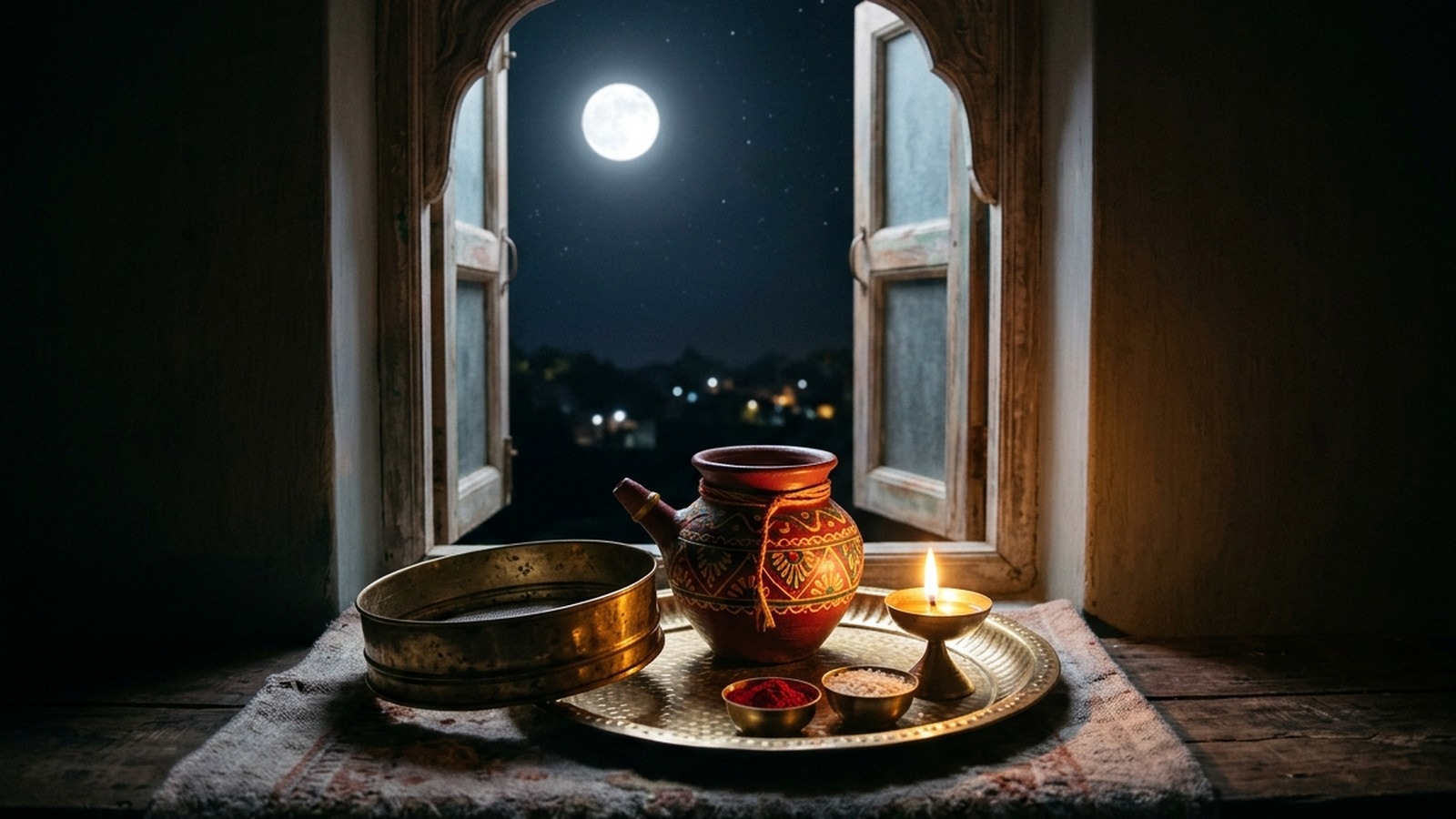
Karwa Chauth is an austere Nirjala (waterless) fast observed by married Hindu women on Kartika Krishna Chaturthi praying for the longevity, prosperity, and radiant health of their husbands. Beginning before dawn with the loving **Sargi** meal prepared by mothers-in-law, women fast without food or water all day, listen to the Karwa Chauth Vrat Katha in late afternoon, and break their fast only upon sighting the Moon through a sieve (Chhalni) and offering Arghya.
City Timings
Astronomical Geometry & The Moonrise (Chandrodaya) Rule
Karwa Chauth is one of the most place-dependent observances in the Hindu calendar. The fast is governed by **Chandrodaya** — the moment the Moon rises above the eastern horizon at that city's own latitude and longitude.
Because moonrise depends on where you stand, it falls at different local clock times across the world — within one time zone, a city further east sees the Moon rise earlier on the clock (Kolkata before Mumbai). A fasting woman does not break her waterless fast until the Moon has risen in her own city. Nava Panchangam does not compute moonrise and does not yet date Karwa Chauth, so take the moonrise time from a moonrise table or almanac for your city.
Luni-Solar Calendar Bridge: Kartika vs. Ashvina Krishna Chaturthi
Ashvina Krishna Chaturthi (South India / Gujarat / Maharashtra)
Kartika Krishna Chaturthi (North India / Punjab / Haryana / UP / Rajasthan)
Because Karwa Chauth takes place during Krishna Paksha (the dark waning fortnight), regional calendar naming diverges by one month. In North India's Purnimanta calendar (where months begin after the full moon), this dark fortnight follows Ashwin Purnima, making it the dark half of Kartika. In South and Western India's Amanta calendar (where months end on the new moon Amavasya), this exact same fortnight is the dark half of Ashvina. Both systems name the same 4th waning tithi; the moonrise that ends the fast is local, so its clock time differs from city to city.
Geodetic Vedic Sankalpam & Spatial Alignment
Sacred Samagri & Interactive Shopping Checklist
Check off gathered items (saved automatically to your browser) or share the remaining list with your family via WhatsApp.
🍲 Pre-Dawn Sargi Essentials (Before 4:30 AM)
🌕 Evening Vrat & Chandrodaya Thali
💄 Solah Shringar (16 Adornments)
🥮 Parana & Naivedyam Groceries
Step-by-Step Puja Vidhi & Aradhana Procedure
🪔 Sacred Procedure
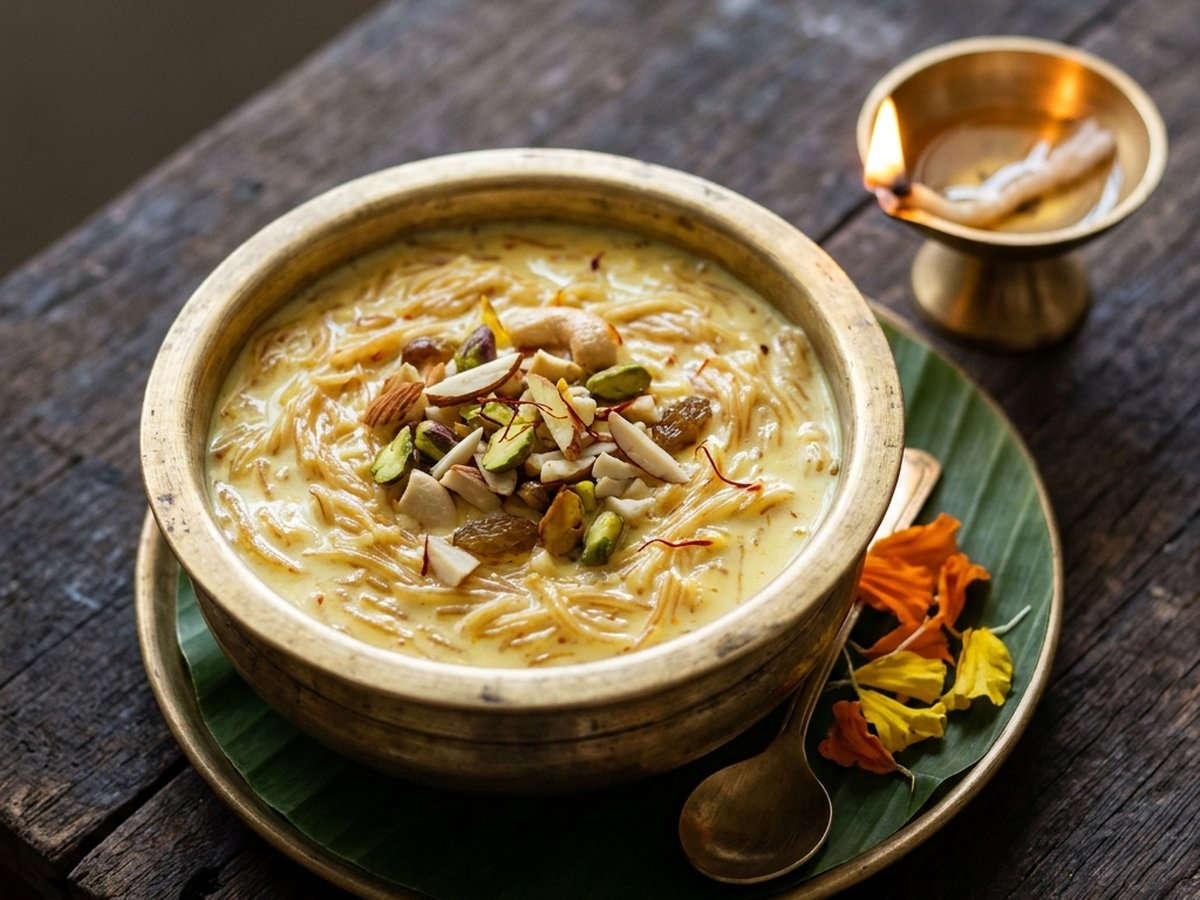
- Step 1 (Pre-Dawn Sargi): Wake up during Brahma Muhurtham (approx 4:00–4:30 AM). Consume the loving Sargi meal prepared by your mother-in-law (pheni, fruits, nuts, milk) and drink ample water before sunrise.
- Step 2: Cleanse and take the formal Nirjala fast vow at sunrise, refraining from food and water throughout the day.
- Step 3 (Late Afternoon Puja): Gather in the afternoon dressed in bridal red or festive attire. Form a circle, exchange Karwa pots (Pheri ritual), and listen to the sacred Karwa Chauth Vrat Katha.
- Step 4 (Night Moonrise): As the Moon crests the horizon, light the ghee diya on the thali. View the glowing Moon through the sieve, offer Arghya (water, milk, akshat) to Chandra Deva.
- Step 5: Turn the sieve to view your husband's face through the same mesh, seeking his blessings and long life.
- Step 6: The husband takes a sip of water from the pot and gently feeds it to his wife, followed by a sweet morsel, lovingly concluding the fast.
Authentic Naivedyam Prasadam Recipes
Traditional proportions, temple-style techniques, and time-honored omens passed down through generations.
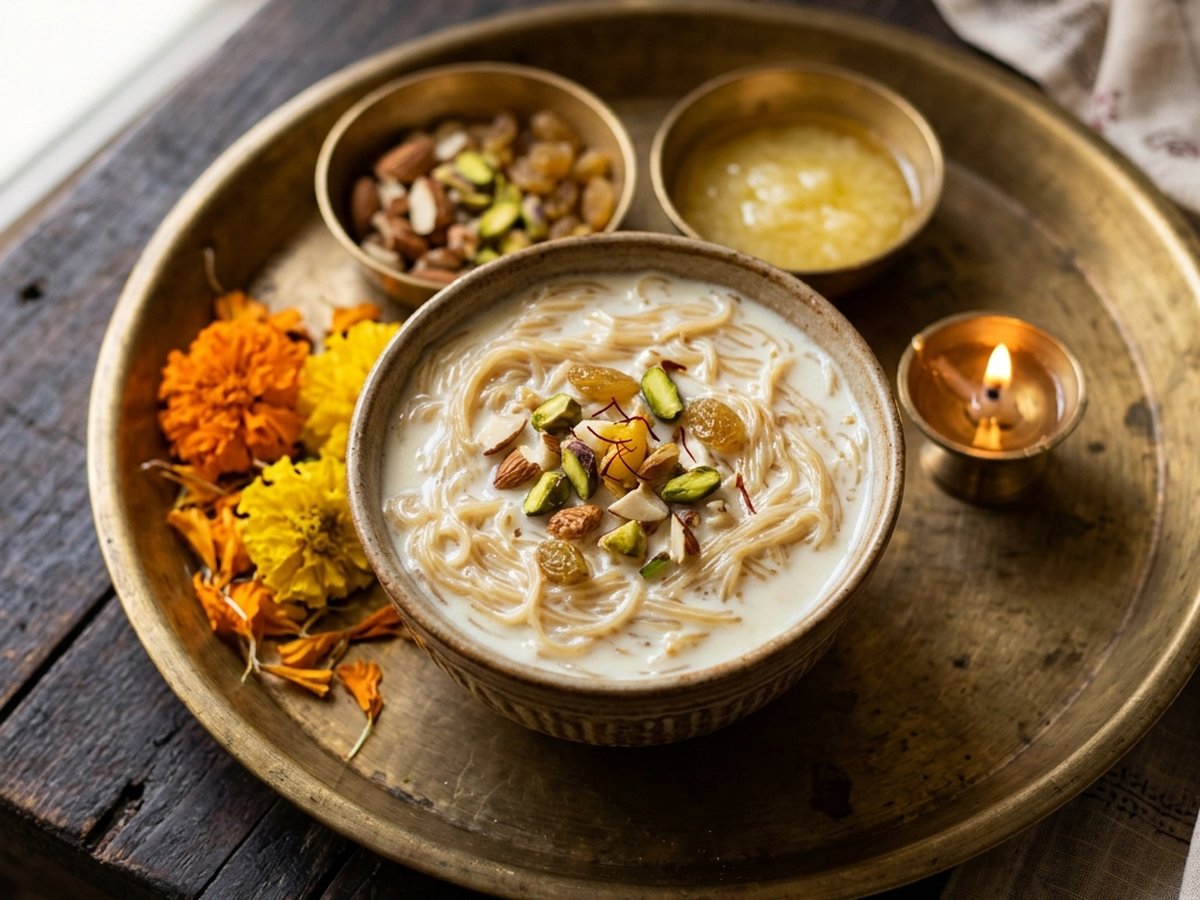
🍯 Sargi Special Feni Kheer (Pre-Dawn Hydration Porridge)
⚖️ Fine Roasted Feni / Vermicelli : Whole Milk : Sugar = 1 cup : 4 cups : 0.5 cup⏱️ Prep 5 min · Cook 15 min
Ingredients & Proportions:
- 1 cup fine wheat feni (pre-roasted thin vermicelli coils)
- 4 cups whole milk (boiled and hot)
- 1/2 cup granulated sugar or crushed rock sugar
- 1/4 cup chopped almonds, pistachios, and raisins
- 1/4 tsp freshly crushed green cardamom powder
- A few saffron strands
Method & Procedure:
- In a heavy-bottomed saucepan, bring whole milk to a rolling simmer on medium flame.
- Add saffron strands and crushed cardamom powder; simmer for 5 minutes until fragrant and slightly reduced.
- Add sugar and stir until completely dissolved.
- Gently crush the roasted feni coils into the simmering milk. Feni cooks almost instantly in hot milk (under 2 minutes).
- Turn off flame, toss in chopped nuts and raisins, and cover.
- Consume warm between 3:30 AM and 4:15 AM before the pre-dawn cutoff, accompanied by plenty of water and fresh fruits to sustain energy throughout the Nirjala fast.
Endurance Secret: High complex carbohydrates in feni paired with dairy fats and milk proteins digest slowly over 14 hours, preventing dehydration headaches and gastric pangs during the strict waterless fast.
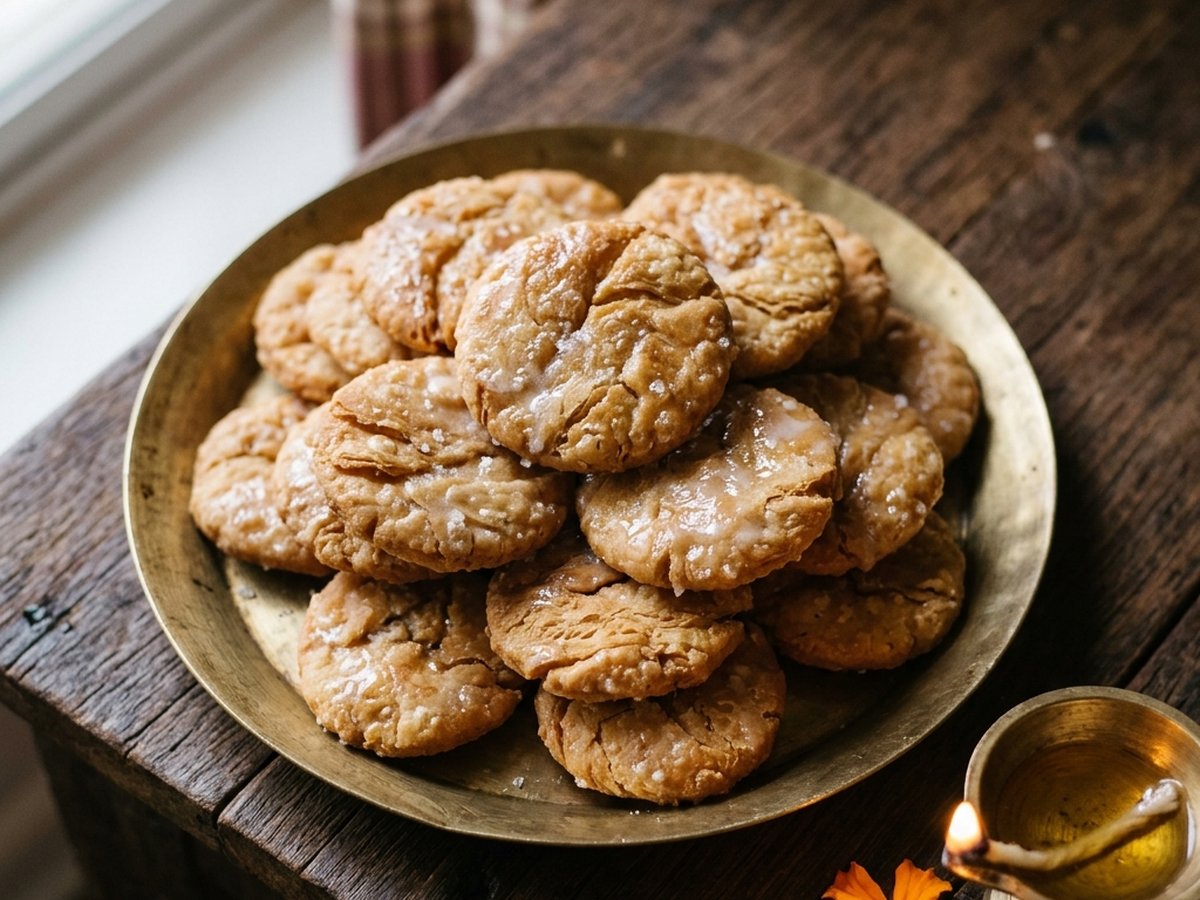
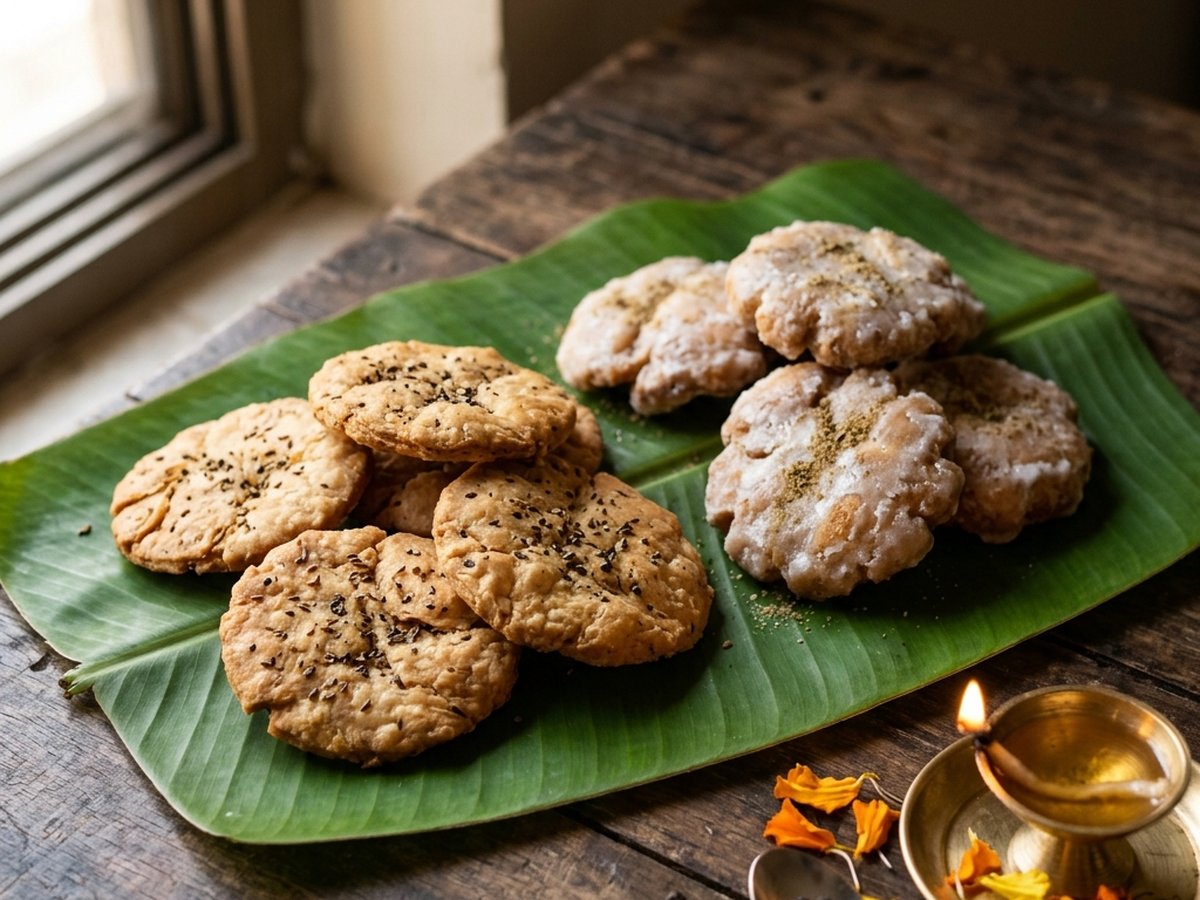
🍯 Traditional Meethi Mathri (Sweet Karwa Crackers)
⚖️ Wheat Flour : Ghee Moyan : Sugar Syrup = 2 cups : 1/4 cup : 1/2 cup⏱️ Prep 30 min · Cook 30 min
Ingredients & Proportions:
- 2 cups all-purpose or whole wheat flour
- 1/4 cup pure melted cow ghee
- 1/2 cup water for kneading
- Sugar Glaze: 1 cup sugar boiled with 1/2 cup water to 2-string consistency
- Pure cow ghee or oil for deep frying
Method & Procedure:
- Rub ghee thoroughly into flour until it resembles breadcrumbs. Knead with water into a tight, firm dough. Rest 20 mins.
- Roll into small thick discs (approx 3-inch diameter). Prick thoroughly with a fork on both sides so they don't puff.
- Deep fry on very low heat for 12-15 minutes until pale golden and super crunchy.
- Dip crispy mathris into warm 2-string sugar syrup for 1 minute; drain on a wire rack until a white frosted sugar shell crystallizes.
Festival Tradition: Mathris are exchanged among married women (Bayana gift) during evening Katha.
Sacred Threshold Art Blueprint: Kolam & Rangoli
📐 Karwa Chauth Moon & Gaura Mata Yantra
📐 Grid Pattern / Dot Matrix: Crescent moon, 8 stars, and Gaura Mata floor diagram drawn in rice flour and red sindoorDrawing Sequence:
- Sweep the terrace, balcony, or courtyard floor where moon sighting will occur.
- Draw a prominent crescent moon with face silhouette (Chandra Devata) using white rice flour.
- Surround the moon with 8 shining star (Nakshatra) motifs representing Rohini and celestial protectors.
- Draw the traditional Karwa pot motif underneath, flanked by sugarcane stalks.
- Decorate the inner areas with bright red sindoor and yellow turmeric.
- Place a small ghee deepam on the edge of the diagram while waiting for moonrise.
Invoking Chandra Devata and Goddess Parvati (Gaura Mata) on the floor consecrates the space of viewing, ensuring that when the moon rises, the first rays transmitted through the sieve bestow unbroken marital bliss (Akhanda Saubhagyavati).
Fasting Rules & Observance Guidelines
- Strict Nirjala Fast: Neither food nor a single drop of water is consumed from sunrise until moonrise.
- Pregnant women, lactating mothers, and diabetics are scripturally exempted from waterless fasting; they may drink milk, coconut water, and fruits.
- Wear traditional red, pink, or yellow auspicious colors; avoid black, white, or somber shades on this day.
- Refrain from using sharp objects (needles, scissors, knives) during the fasting hours.
The fast is broken immediately after Chandra Arghya when the husband feeds the first sip of water and a bite of sweet to his wife, followed by a warm festive dinner.
The Day's Sacred Sequence
Pre-Dawn (Sargi)
Consuming the blessing meal sent by the mother-in-law before sunrise.
- Brahma Muhurtham bath
- Sargi feast
- Water hydration
Late Afternoon (Baya & Vrat Katha)
Women gather in circles dressed in bridal finery to recite the story of Queen Veero and exchange painted pots.
- Baya gift to mother-in-law
- 7-round Karwa thali rotation (Pheri)
- Story listening
Night (Chandrodaya & Arghya)
Viewing the moon through the sieve, offering water to Chandra, and breaking the fast with the husband.
- Sieve viewing of Moon and Husband
- Chandra Arghya offering
- First sip of water
Regional Traditions
📍 Punjab & Delhi
Karwa Chauth
Rich Sargi with Pheni (vermicelli cooked in milk), vibrant Mehendi parties, and grand multi-family terrace gatherings.
📍 Rajasthan & Gujarat
Karaka Chaturthi
Clay pots intricately hand-painted with peacocks, wearing traditional Lehariya or Bandhani sarees.
📍 Uttar Pradesh
Karva Chauth
Drawing Gauri-Shiva wall murals (Gauri Mata) with cow dung or rice paste and offering sugar candies (Khand ki Karve).
Diaspora Living Guide: Cloud Cover & High-Rise Apartments
- Overcast & Cloudy Skies: In cloudy or rainy Western cities (e.g., Seattle, London, Vancouver) where the Moon is obscured by clouds, Shastras specify: wait until the astronomical moonrise minute has passed for your exact city, face the eastern horizon, offer Arghya mentally to Chandra Deva, and break the fast.
- Terrace & Balcony Access: Many high-rise apartment dwellers in Dallas, Jersey City, or London gather on community rooftop terraces to spot the Moon together.
Modern Apartment Living & Emergency Substitutions
Chandrodaya Vyapini Rule & Cloudy Sky Shastric Dispensation: Karwa Chauth is strictly determined by Chaturthi Tithi prevailing at the exact moment of moonrise (Chandrodaya Vyapini). If Chaturthi prevails on two consecutive evenings, the day with moonrise Chaturthi is observed. Cloudy Weather Exception: In western cities (London, Chicago, Toronto), heavy autumn clouds or rain often obstruct moon visibility. Dharma Shastras state: Devotees need not remain fasting in distress! If the moon is obscured by clouds past your city's moonrise time: (1) Take the moonrise time for your city from a moonrise table or almanac; (2) Face the exact directional azimuth of the moon; (3) Worship Rohini Nakshatra or the silver idol of Chandra; (4) Offer Arghya in that direction, look at your husband through the sieve, and complete Parana.
🏢 Apartment-Safe Hacks & Diaspora Solutions
- No Traditional Decorated Sieve (Chalni)? Use a clean fine-mesh stainless steel kitchen flour or tea strainer adorned with a small red ribbon or touch of kumkum. The shastric essence is filtering the light rays.
- Missing Clay Karwa Pot? Use a clean copper, brass, or silver Kalash / Lota. Wrap a sacred red thread (Mauli) around its neck and place a mango leaf or betel leaf on top.
- Heavy Cloud Cover / No Moon in Sight? Wait until 15 minutes past the published moonrise time for your city. Offer water in the eastern/southeastern sky where the moon is located, chant the Chandra mantra, and complete the ritual with husband's blessings.
- Medical Fasting Exemption: Pregnant women, nursing mothers, and diabetics should NOT observe Nirjala (waterless) fast. Shastras permit Phalahar fasting (drinking warm milk, coconut water, and fruits) without any loss of spiritual merit.
Spiritual Significance: The Legend of Queen Veero
The primary legend narrates the story of Queen Veero (Veeravati), who was the beloved only sister among seven devoted brothers. Fasting on Karwa Chauth at her parents' home, she grew faint from hunger. Unable to bear her agony, her brothers climbed a tall pipal tree, held a burning torch behind a sieve, and tricked her into believing the Moon had risen.
When Veeravati broke her fast on the false moon, news arrived that her husband, the King, had fallen grievously ill. Realizing her error, she undertook rigorous penance throughout the year and observed the subsequent Karwa Chauth with unwavering devotion. Pleased by her steadfast love and tapas, Goddess Parvati restored her husband to radiant life. The fast celebrates the profound truth that selfless love and sacrifice possess the power to conquer even destiny.
Frequently Asked Questions About Karwa Chauth
What if the Moon is not visible due to clouds or rain in my city? ▾
Scriptures state that when the Moon is obscured by clouds, wait until the local moonrise time (from a moonrise table for your city) has passed, face the eastern sky, offer Arghya to the direction of the Moon, and break your fast with peace.
Why does moonrise time vary so much between cities in the same country? ▾
Because moonrise depends on both latitude and longitude. As Earth rotates from west to east, a city further east sees the Moon rise earlier in absolute time; within one time zone that shows on the clock too (Kolkata before Mumbai). Across time zones the clock times are not directly comparable.
What is the Sargi meal and when must it be eaten? ▾
Sargi is the pre-dawn meal traditionally gifted by the mother-in-law, consisting of dry fruits, pheni, sweets, and fruits. It must be completely eaten before local sunrise.
See Your City's Panchangam for the Day
Tithi, nakshatra, sunrise, sunset and Rahu Kalam for your city. Nava Panchangam does not compute moonrise; use a moonrise table for the Karwa Chauth arghya.
Open Your City's Panchangam →