
Krishna Janmashtami & Gokulashtami 2027: Date, Nishita Puja Muhurtham & Fasting Guide in San Francisco
The complete guide to the avatar of Bhagavan Sri Krishna: Smartha vs. Vaishnava dates, Nishita Kala puja window, baby footstep drawings, and seedai recipes.
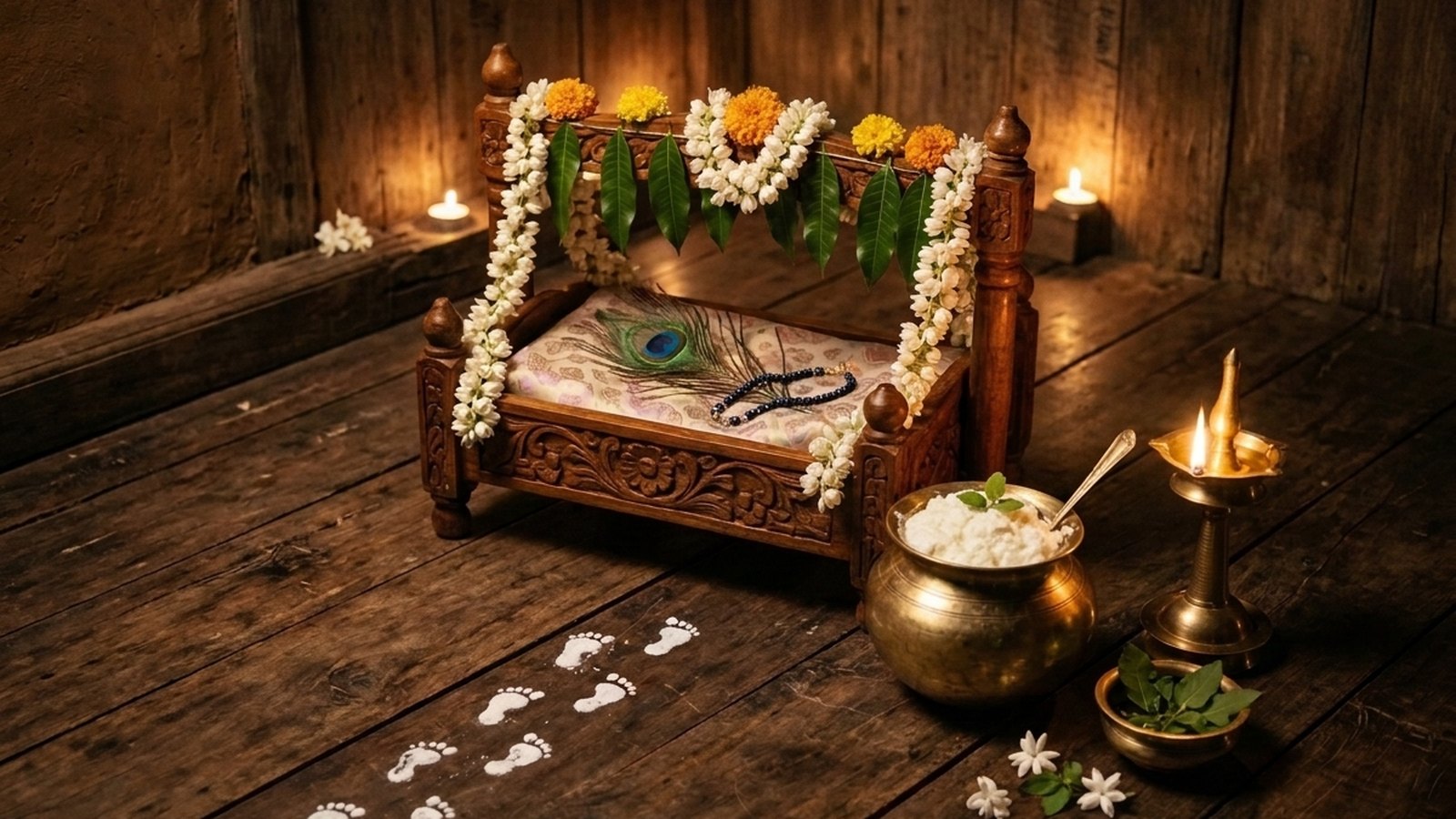
Krishna Janmashtami commemorates the divine birth of Bhagavan Sri Krishna, the eighth avatar of Lord Vishnu, born to Devaki and Vasudeva at midnight under the Rohini nakshatra on Shravana Krishna Ashtami (Bhadrapada in the purnimanta calendar). Celebrated with day-long fasting, drawing miniature rice-flour baby footprints from the entrance to the altar, and midnight Nishita Kala puja with butter, seedai, and devotional kirtan.
City Timings
Astronomical Geometry & Smartha vs. Vaishnava Nirnaya Rules
Krishna Janmashtami determination is among the most intricate in Hindu astrology because it synthesizes two astronomical variables: 1) Krishna Ashtami Tithi (the 8th waning lunar phase), and 2) Rohini Nakshatra (Aldebaran), both measured at local midnight (Nishita Kala, the 8th muhurtha of the night, approx. 11:45 PM to 12:45 AM).
Two major traditions resolve this differently: • Smartha tradition emphasizes Ashtami Tithi prevailing at Nishita Kala (Gokulashtami). • Sri Vaishnava tradition emphasizes Rohini Nakshatra (Sri Jayanti) and avoids any conjunction with Saptami tithi. When Ashtami and Rohini fall on adjacent days, Smarthas observe on the Ashtami day and Vaishnavas on the Rohini day. Furthermore, because midnight Nishita occurs at completely different UTC hours in Dallas, London, and Chennai, the prevailing tithi can legitimately fall on different civil calendar days across continents.
The date shown on this page is the day Nava Panchangam's shipped rule computes: the first day, in the lunar month Shravana, on which Krishna Ashtami is current at sunrise. That is a sunrise reckoning, not the Smartha midnight one described above, which can fall a day earlier. The Nishita window shown is for that night in your city. The Sri Vaishnava Sri Jayanti can fall on a different day and is not dated on this page.
Luni-Solar Calendar Bridge: Shravana vs. Bhadrapada Krishna Ashtami Alignment
Shravana Krishna Ashtami (South & Western India)
Bhadrapada Krishna Ashtami (North India)
In North India's Purnimanta calendar, the month starts on the day after Purnima, making this dark fortnight the beginning of Bhadrapada. In South India's Amanta calendar, the month ends on Amavasya, making this dark fortnight part of Shravana. Both calendars name the same Krishna Ashtami. The civil day kept can still differ — between the Smartha and Sri Vaishnava reckonings, and from city to city, because midnight is local.
Geodetic Vedic Sankalpam & Spatial Alignment
📍 Geodetic Vedic Sankalpam Studio
🌌 Traditional place clause: Krauñca Dvīpe, Ramaṇaka Varshe, Aindra Khaṇḍe, Meroḥ Paścima DigbhāgeRecite at the beginning of puja to orient your prayer in cosmic spacetime (Kāla-Deśa-Pātra):
The dvipa-varsha-khanda clause for places outside Bharata follows one reckoning among several and is awaiting review by our astrologer. The remaining clauses are computed by the panchangam engine.
Sacred Samagri & Interactive Shopping Checklist
Check off gathered items (saved automatically to your browser) or share the remaining list with your family via WhatsApp.
🪔 Krishna Altar & Shringar Essentials
🌿 Fresh Market & Botanicals
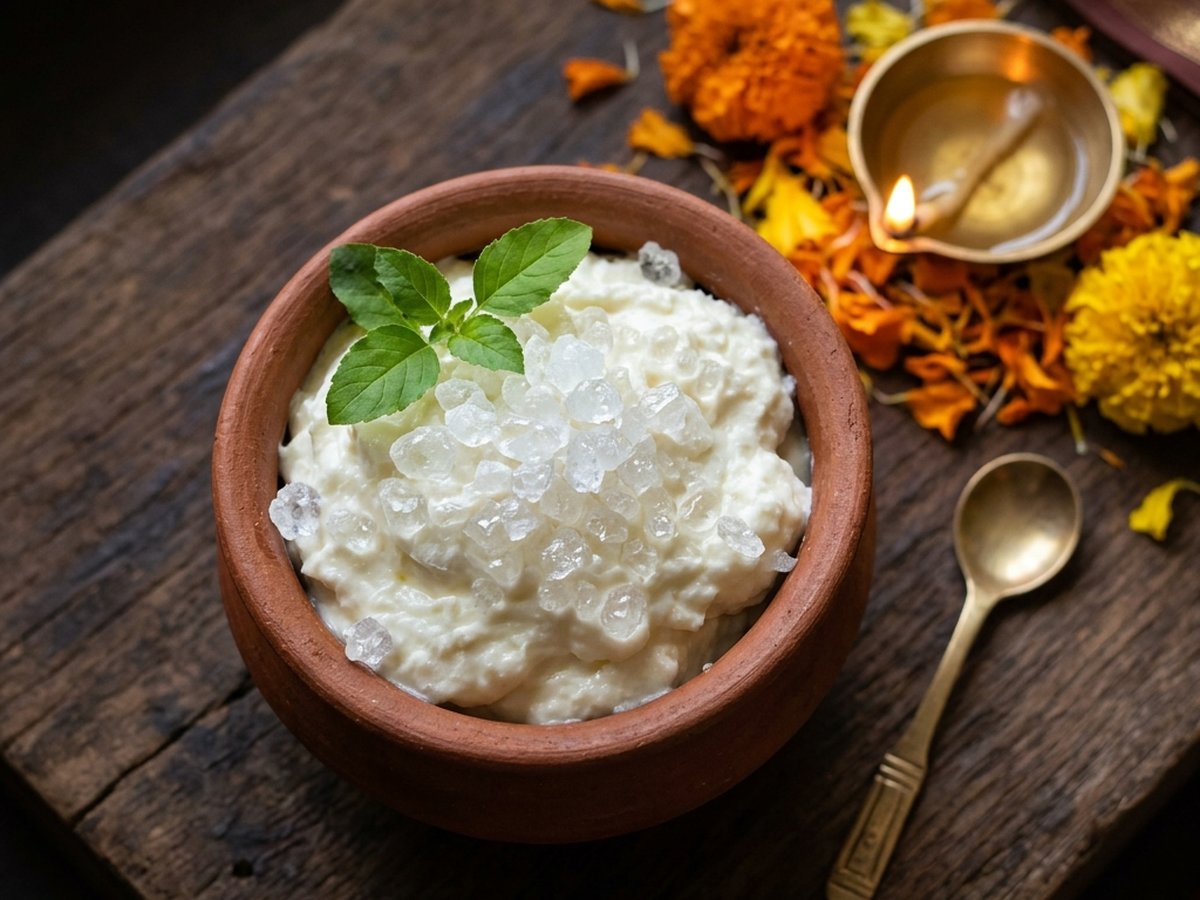
🥣 Seedai & Murukku Pantry Ingredients
👣 Baby Footstep Decor
Step-by-Step Puja Vidhi & Aradhana Procedure
🪔 Sacred Procedure
- Step 1: Clean the entrance and draw miniature baby footprints using rice flour entering from the front door to the puja altar, welcoming baby Krishna.
- Step 2: Bathe the baby Krishna idol with milk, honey, panchamritam, and fragrant water while chanting Sri Purusha Suktam or Vishnu Sahasranamam.
- Step 3: Adorn the deity with yellow silk, a peacock feather (Mayil Peeli), and fragrant Tulasi garlands.
- Step 4: Place small bowls of butter, aval, fruits, and seedai before the deity. Rock the cradle gently singing Krishna lullabies.
- Step 5: At midnight (Nishita Kala), light camphor aarti, blow the conch (Shankha), offer flowers, and perform the midnight birthday aradhana.
- Step 6: Partake in the blessed butter and panchamritam prasad to conclude the day's fast.
Authentic Naivedyam Prasadam Recipes
Traditional proportions, temple-style techniques, and time-honored omens passed down through generations.
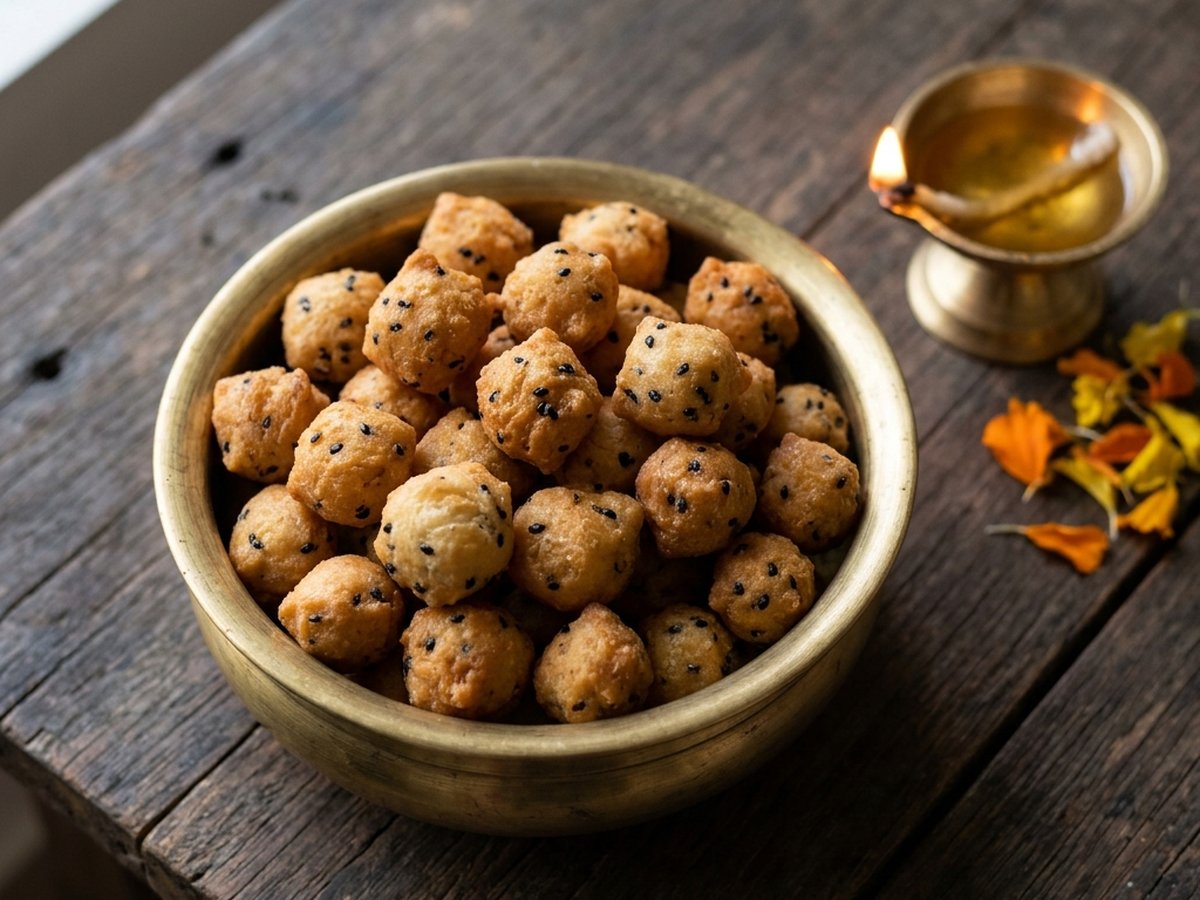
🍯 Traditional Uppu Seedai (Crispy Savory Pearls with Zero-Bursting Secret)
⚖️ Raw Rice Flour : Roasted Urad Dal Flour : Soft Butter = 1 cup : 1 tbsp : 1 tbsp⏱️ Prep 45 min · Cook 30 min
Ingredients & Proportions:
- 1 cup fine processed raw rice flour
- 1 tbsp urad dal flour (dry roasted to golden aroma and sieved)
- 1 tbsp unsalted soft cow butter
- 1 tsp white sesame seeds (safed til)
- 1/2 tsp cumin seeds
- 1 pinch asafoetida (Hing) dissolved in 1 tsp water
- 1/2 tsp rock salt (dissolved in 1/3 cup water)
- Cold-pressed peanut or coconut oil for deep frying
Method & Procedure:
- CRITICAL NON-BURSTING STEP 1: Sieve both rice flour and urad dal flour through a fine flour mesh at least TWICE. Any microscopic unbroken grit grain will burst like a firecracker in hot oil!
- Dry roast the sieved rice flour on very low heat for 3-4 minutes until warm to the touch (Kolam Padham). Do not let the flour change color.
- In a wide mixing bowl, mix warm rice flour, urad dal flour, butter, sesame seeds, cumin seeds, and hing. Rub butter evenly into flour until it resembles breadcrumbs.
- Gradually sprinkle the salted water and gently gather the dough into a soft, non-sticky mass. Do NOT knead hard.
- CRITICAL NON-BURSTING STEP 2: Pinch marble-sized portions and roll between palms with VERY LIGHT pressure. Do NOT roll into tight compact spheres (tight pressure traps steam pockets).
- CRITICAL NON-BURSTING STEP 3: Prick each rolled ball gently with a clean toothpick or needle, and spread them on a clean dry cotton cloth for 30 minutes to evaporate surface moisture.
- Heat oil in a kadai on medium flame. Drop a test ball; it should sink and slowly rise to top. Deep fry seedai in batches on medium-low heat, stirring gently, until crisp and golden brown with bubbling oil settling completely.
The Science of Why Seedai Bursts: Trapped steam pockets from unsieved grits or compressed rolling cause catastrophic bursting. Double-sieving, feather-light rolling, needle pricking, and 30-minute cloth drying completely guarantees 100% burst-free, crispy perfection!
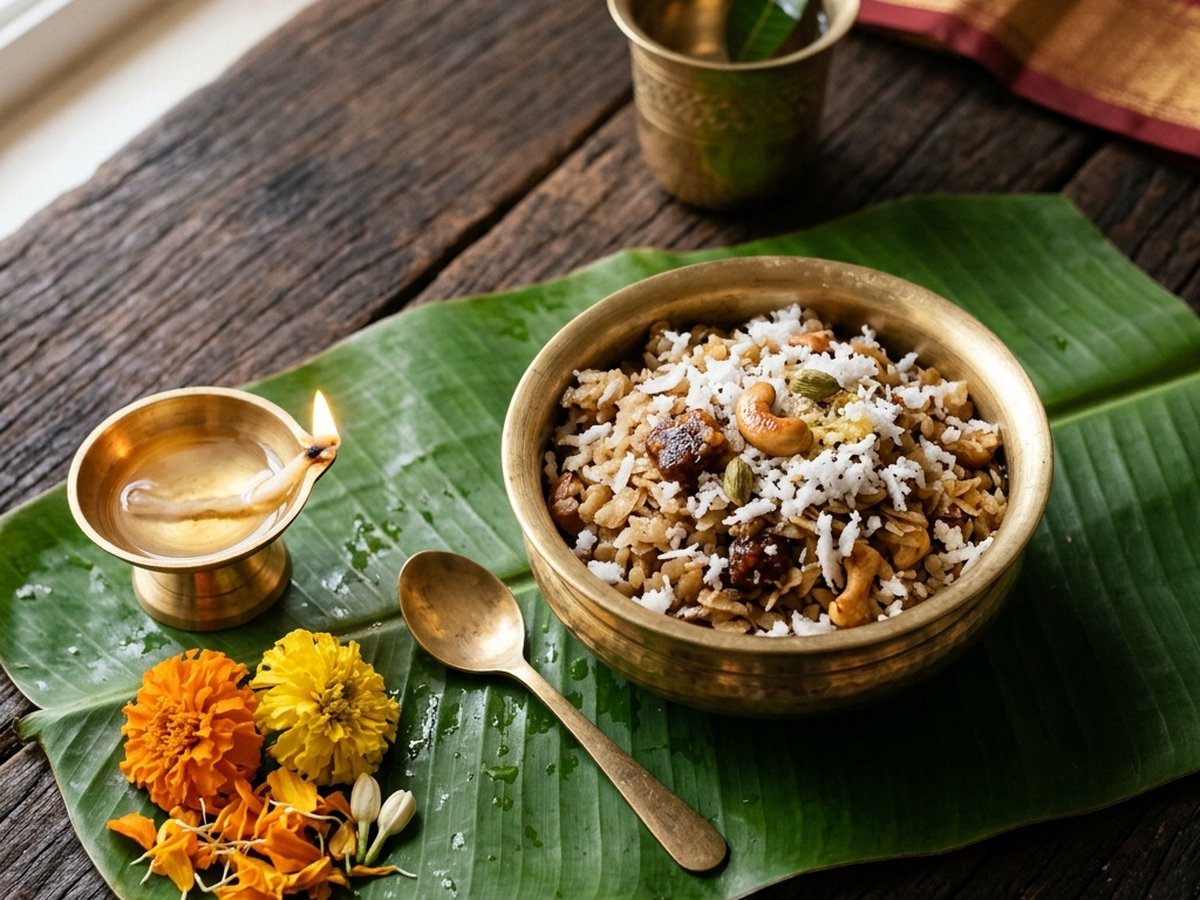
🍯 Sudama's Sweet Aval Nanachadhu (Jaggery Flattened Rice)
⚖️ Thick Poha : Grated Jaggery : Fresh Coconut = 1 : 0.75 : 0.5⏱️ Prep 15 min · Cook 5 min
Ingredients & Proportions:
- 1 cup thick beaten rice (Poha / Aval)
- 3/4 cup dark grated organic jaggery
- 1/2 cup fresh grated coconut
- 2 tbsp pure cow ghee
- 10 whole cashews & 1 pinch cardamom powder
- 1 tsp warm milk or water for moistening
Method & Procedure:
- Rinse thick poha briefly in water and drain completely. Sprinkle 1 tbsp warm milk or water and rest for 10 minutes until soft and pliable.
- Melt jaggery with 3 tbsp water in a small pan, strain for impurities, and simmer until warm.
- Fold warm jaggery syrup into the softened poha along with fresh grated coconut.
- Fry cashews in pure cow ghee until golden; pour over the aval with crushed cardamom. Toss gently.
Spiritual Secret: Lord Krishna treasured Kuchela's (Sudama's) humble fistful of beaten rice above all royal banquets, showering boundless eternal prosperity in return.
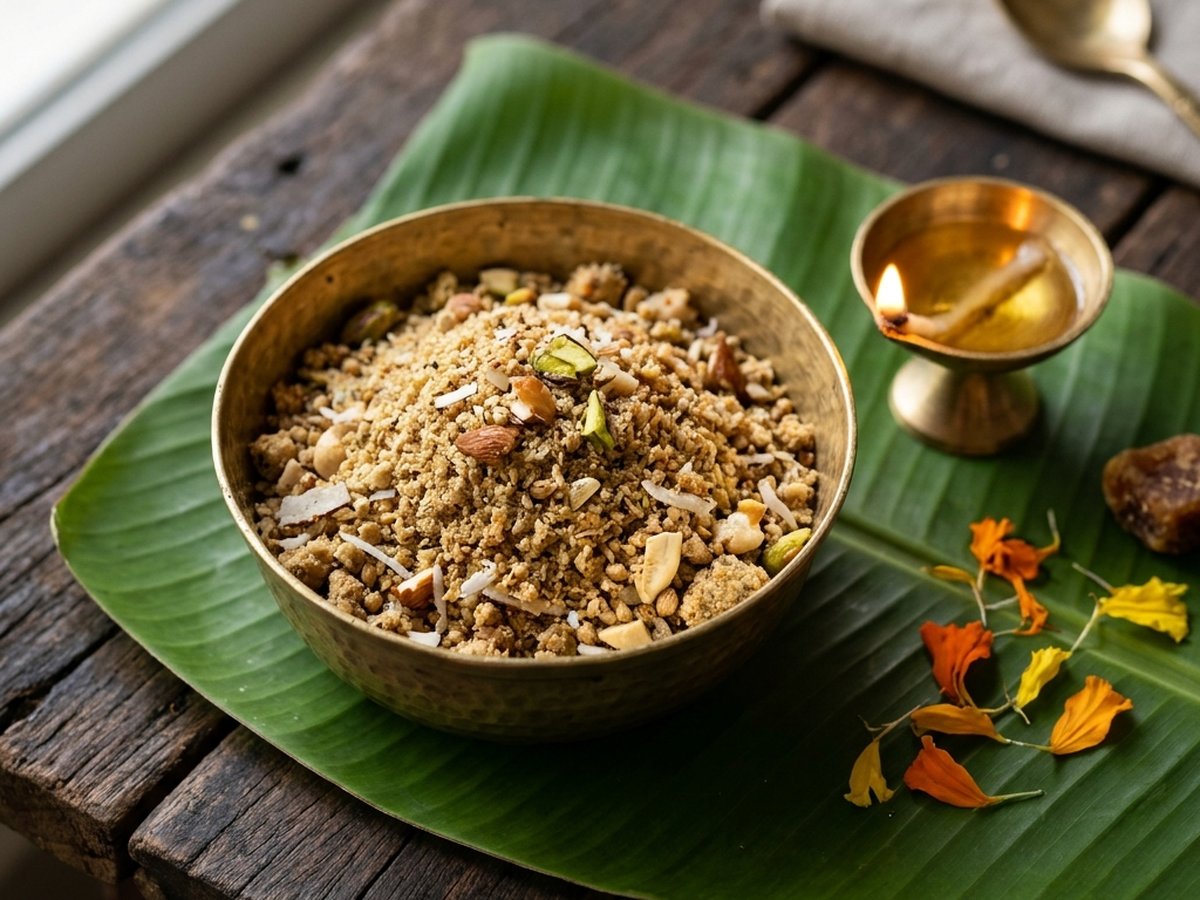
Sacred Threshold Art Blueprint: Kolam & Rangoli
📐 Krishna Padam (Baby Krishna Footsteps into Home)
📐 Grid Pattern / Dot Matrix: Freehand natural hand-stamping with rice flour batter walking from main threshold into puja altarDrawing Sequence:
- Mix soaked raw rice ground with a little water into a thick, smooth batter (Arisi Maavu).
- Close your right hand into a gentle fist. Dip the outer fleshy edge of your pinky-finger palm into the batter.
- Stamp firmly onto the floor to form the natural curved sole and heel of a baby's foot.
- Dip your 5 fingertips into the rice batter and gently press five small dots above the foot palm to represent tiny baby toes (with the thumb toe slightly larger).
- Repeat with the left hand to create the matching left footprint, taking small baby steps forward.
- Draw continuous pairs of footsteps starting outside the main entrance door, crossing the threshold, and leading straight to the feet of the altar.
- Optional: Place a tiny red dot of kumkum or yellow dot of turmeric in the center of each tiny heel.
Drawing Krishna's lotus footsteps symbolizes the divine child entering the home, transforming the mundane household into Gokulam. The footsteps entering inward (never outward) anchor divine presence, bliss, and protection within the family.
Fasting & Observance Protocols
- Devotees observe a complete fast (Nirjala) or water/milk/fruits (Phalahara) from morning until midnight.
- Avoid all grains, pulses, onion, garlic, and heavy foods during the daylight hours.
- Continuous chanting of the Mahamantra: 'Hare Krishna Hare Krishna, Krishna Krishna Hare Hare, Hare Rama Hare Rama, Rama Rama Hare Hare'.
- Reading Srimad Bhagavatam Canto 10 describing Sri Krishna's divine birth in the Mathura prison.
The fast is formally concluded immediately following the midnight Nishita Kala puja by consuming sanctified charanamritam / butter and a light fruit offering. Complete grain meals are resumed the following sunrise after the morning prayer.
The Janmashtami & Dahi Handi Celebrations
Day 1: Janmashtami (Midnight Birth Celebration)
Day-long fasting, home decoration, drawing baby feet, and midnight Nishita Kala avatar puja.
- Fasting until midnight
- Drawing baby feet with rice flour
- Abhishekam and midnight birthday aarti
Day 2: Nandotsav & Dahi Handi (Utlotsavam)
Commemorating Nanda Baba's joyous celebration in Gokul. Youth form human pyramids to break earthen pots (Dahi Handi) filled with curd and butter.
- Human pyramids breaking Dahi Handi pots
- Uriyadi (pot breaking with sticks) in South India
- Feasting on festive dishes
Regional Celebrations Across India
📍 Tamil Nadu & South India
Gokulashtami / Sri Jayanti
Drawing intricate baby footprints from threshold to altar, Uppu Seedai and Vella Seedai, and Uriyadi.
📍 Maharashtra & Gujarat
Dahi Handi / Gokulashtami
Massive Govinda troupes forming 9-tier human pyramids to smash curd pots suspended high above streets.
📍 Mathura & Vrindavan (UP)
Krishna Janmabhoomi Utsav
Lakhs of pilgrims visit the Janmasthan temple; 24-hour non-stop kirtan, Raslila enactments, and Maha Abhishekam.
📍 Kerala
Ashtami Rohini
Sobha Yatras where thousands of children dress as infant Krishna and Radha in vibrant processions.
Diaspora Living Guide: Celebrating in Apartments (Dallas, UK, etc.)
- Baby Footprints on Carpets: If living in a carpeted overseas apartment where wet rice flour is difficult to wash, place paper stencils or draw the footsteps on an entry floor mat, threshold tile, or plastic runner.
- Apartment Midnight Puja: Since midnight in the US (e.g. 11:45 PM CST) falls during quiet residential hours, replace loud conch-blowing with soft ringing bells and gentle harmonium/kirtan.
- Seedai Safety Tip: When frying homemade Uppu Seedai, pierce each dough ball with a toothpick or needle and ensure the flour is sieved twice to eliminate moisture, preventing the seedai from bursting in hot oil.
- Costume for Children: Dressing children in yellow dhoti, crown with peacock feather, and a small flute connects the next generation with tradition.
Modern Apartment Living & Emergency Substitutions
Smartha vs. Sri Vaishnava (Sri Jayanti) Observance: Smartha tradition observes Krishna Janmashtami strictly when Ashtami Tithi prevails during Nishita Kala (midnight window). Sri Vaishnava tradition (Pancharatra & Munitraya) observes Sri Jayanti, which strictly requires the conjunction of Rohini Nakshatra with Ashtami Tithi. If Ashtami occurs on one day and Rohini Nakshatra on the next, Sri Vaishnavas prioritize Rohini Nakshatra, leading to celebrations on consecutive days.
🏢 Apartment-Safe Hacks & Diaspora Solutions
- No Stone Grinder for Rice Batter Footprints? Use store-bought fine rice flour mixed with milk and water into a smooth, thick paint-like batter.
- No Churned Desi Butter? Use organic unsalted sweet cream butter from the refrigerator, brought to room temperature.
- Apartment Burst-Seedai Anxiety? If apprehensive about deep frying seedai, prepare Aval Nanachadhu (sweet poha) and Vennai (butter) with fruits — Krishna's most beloved naivedyam requires zero oil!
- Missing Bamboo Flute? Place a clean new peacock feather or fresh fragrant Tulasi garland across the idol.
Spiritual Significance & The Avatar in the Midnight Prison
The birth of Sri Krishna in the dark dungeons of Kamsa represents the ultimate metaphysical allegory. The prison symbolises the human condition bound by chains of karma, fear, and worldly attachment. Kamsa represents the arrogant ego that ruthlessly destroys every subtle noble aspiration (the seven earlier children). Devaki represents divine devotion (Bhakti), and Vasudeva represents pure intellect (Buddhi).
When devotion and intellect unite in intense prayer, the Lord is born at the darkest hour of the midnight storm. The moment Krishna appears, the prison gates fling open on their own, the iron shackles fall away, and the ferocious Yamuna river parts to allow safe passage. In the same way, the advent of Krishna-consciousness in the human heart instantly dissolves all bonds of fear, anxiety, and ignorance.
Frequently Asked Questions About Krishna Janmashtami
Why are Janmashtami and Gokulashtami celebrated on different days in some years? ▾
Smartha tradition observes the day Ashtami prevails at midnight (Gokulashtami). Sri Vaishnava tradition strictly prioritizes Rohini Nakshatra without Saptami overlap (Sri Jayanti). When Ashtami and Rohini do not coincide on the exact same midnight, the two traditions celebrate on consecutive days.
What is the exact time of Nishita Kala puja? ▾
Nishita Kala is the 8th muhurtha of the Hindu night, lasting for approximately 48 to 50 minutes centered on local solar midnight (typically around 11:45 PM to 12:45 AM local time depending on city longitude).
Can pregnant women or elderly fast on Janmashtami? ▾
Classical texts state that health comes first. Pregnant women, children, the elderly, and the unwell should consume milk, fruits, and light sattvic meals rather than strict waterless fasting.
See Your City's Panchangam for the Day
This page shows the Janmashtami date and Nishita window for each city it lists. For any other day: tithi, nakshatra, sunrise, sunset and Rahu Kalam for your city.
Open Your City's Panchangam →