
Maha Shivaratri 2027: Date, Nishita Kala & 4-Prahar Puja Guide in Dallas
A guide to the Great Night of Shiva: the midnight Nishita Kala window for your city, the 4-Prahar Abhishekam sequence, Bilva leaf worship, and Jagran rules.
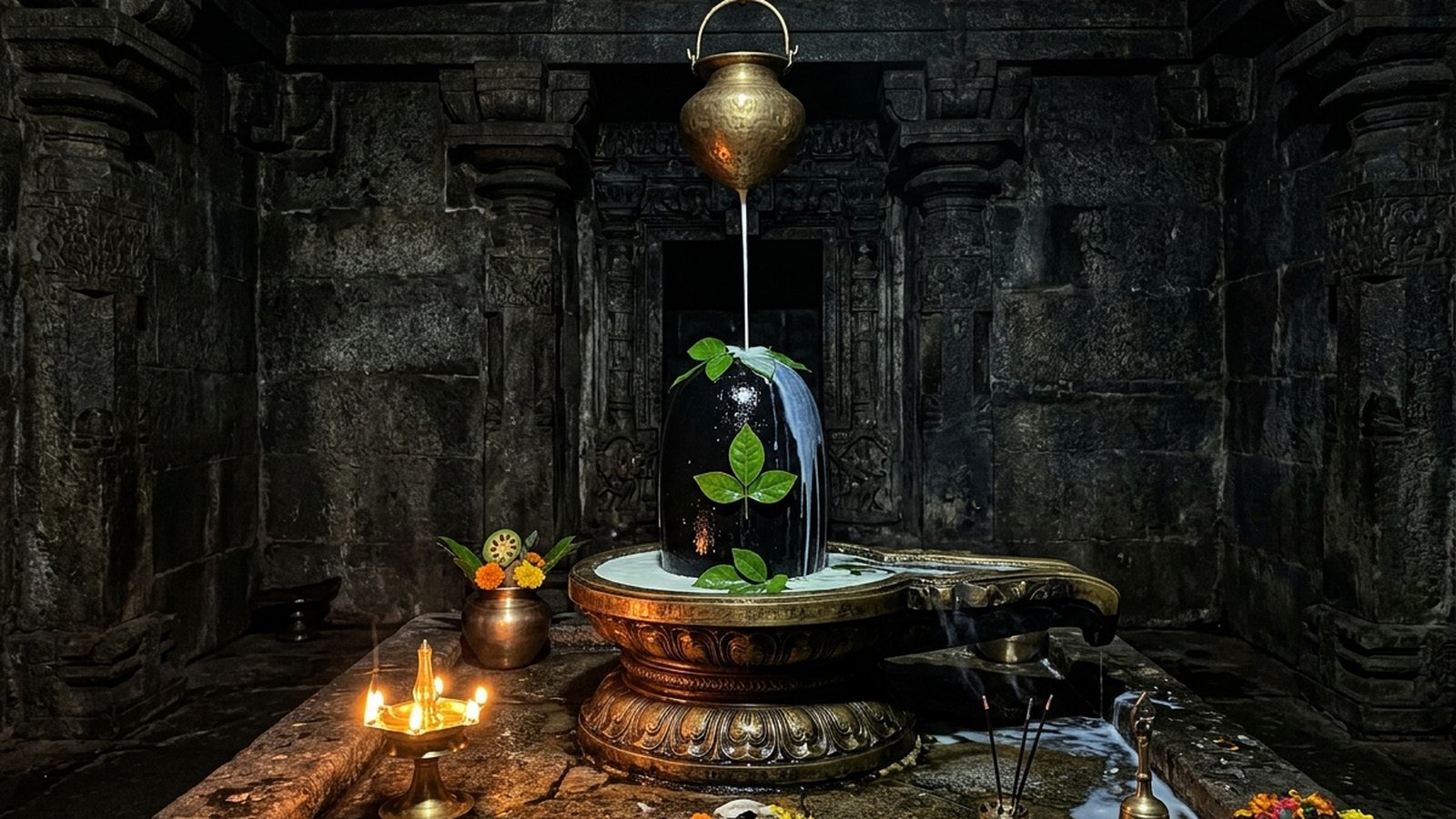
Maha Shivaratri ('The Great Night of Shiva') falls on the 14th waning lunar phase (Krishna Chaturdashi) of Magha/Phalguna month. It commemorates the cosmic manifestation of Shiva as the infinite pillar of radiant fire (Lingodbhava) and the sacred wedding of Shiva and Parvati. Devotees observe a strict 24-hour fast, maintain an all-night vigil (Jagran), and offer sacred Bilva leaves with four continuous cycles of Abhishekam across the four quarters (Prahars) of the night.
City Timings
Astronomical Geometry & The Nishita Kala Nirnaya Rule
In traditional Nirnaya Shastra, Maha Shivaratri is governed by **Nishita Kala Vyapti** — the 8th of the night's 15 muhurtas (the midnight window of about 2 Ghatikas, roughly 48 minutes, centred on the midpoint between local sunset and the next sunrise).
The canonical principle establishes: if Krishna Chaturdashi tithi prevails during Nishita Kala on one night and not the other, that night is unambiguously chosen for the fast and vigil. If Chaturdashi touches Nishita on both consecutive nights, the night with greater Chaturdashi vyapti is observed. Because midnight in Dallas, London, or Sydney occurs at completely different universal times from Chennai, the Chaturdashi tithi can intersect Nishita on a different calendar day in the diaspora.
The date shown on this page is the day Nava Panchangam's shipped rule computes: the night, in the lunar month Magha (never its adhika month), on which Krishna Chaturdashi is current at nisitha, the midpoint of the night after that day's sunset. The Nishita window shown is for that night in your city. In a rare year the Chaturdashi touches no midnight, or two; the classical rule then takes the day it began, or the later night, and Nava Panchangam does not yet compute those few years.
Luni-Solar Calendar Bridge: Phalguna vs. Magha Krishna Chaturdashi
Magha Krishna Chaturdashi (South India / Maharashtra / Gujarat)
Phalguna Krishna Chaturdashi (North India / Varanasi / Kashmir)
Because Maha Shivaratri occurs in Krishna Paksha (the waning dark fortnight), the month naming diverges between regional systems: In North India's Purnimanta calendar (where the month begins right after the full moon), this dark fortnight belongs to Phalguna. In South and Western India's Amanta calendar (where the month ends on the new moon Amavasya), this exact same fortnight is part of Magha. Both systems name the same lunar tithi (the 14th waning day). Midnight Nishita Kala is local, so its clock time — and sometimes the night on which Chaturdashi covers it — differs from city to city.
Geodetic Vedic Sankalpam & Spatial Alignment
📍 Geodetic Vedic Sankalpam Studio
🌌 Traditional place clause: Krauñca Dvīpe, Ramaṇaka Varshe, Aindra Khaṇḍe, Meroḥ Paścima DigbhāgeRecite at the beginning of puja to orient your prayer in cosmic spacetime (Kāla-Deśa-Pātra):
The dvipa-varsha-khanda clause for places outside Bharata follows one reckoning among several and is awaiting review by our astrologer. The remaining clauses are computed by the panchangam engine.
Sacred Samagri & Interactive Shopping Checklist
Check off gathered items (saved automatically to your browser) or share the remaining list with your family via WhatsApp.
🏺 4-Prahar Abhishekam Dravyas
🌿 Shiva Altar & Sacred Botanical Offerings
🍎 Fasting (Phalahar) & Naivedyam Groceries
Step-by-Step Puja Vidhi & Aradhana Procedure
🪔 Sacred Procedure
- Step 1: Rise during Brahma Muhurtham, take a purifying bath, and take the formal Maha Shivaratri Vrat Sankalpam.
- Step 2: Spend the daytime hours in serene contemplation, meditating on the Panchakshara mantra 'Om Namah Shivaya'.
- Step 3 (Prahar 1 - Sunset): Bathe the Linga with raw milk and offer fragrant sandalwood paste, bilva leaves, and sweet lotus.
- Step 4 (Prahar 2 - Night 9 PM to Midnight): Bathe the Linga with yogurt/curd, offer bilva leaves, and chant Sri Rudram.
- Step 5 (Prahar 3 - Midnight Nishita): Bathe the Linga with pure cow's ghee and honey. Sing the Lingashtakam and Bilvashtakam during the supreme Lingodbhava instant.
- Step 6 (Prahar 4 - Pre-Dawn 3 AM to Sunrise): Bathe the Linga with sugarcane juice and tender coconut water, adorned with Vibhuti.
- Step 7: Conclude at morning sunrise with Maha Aarti, offering prayers for universal peace and liberation.
Authentic Naivedyam Prasadam Recipes
Traditional proportions, temple-style techniques, and time-honored omens passed down through generations.
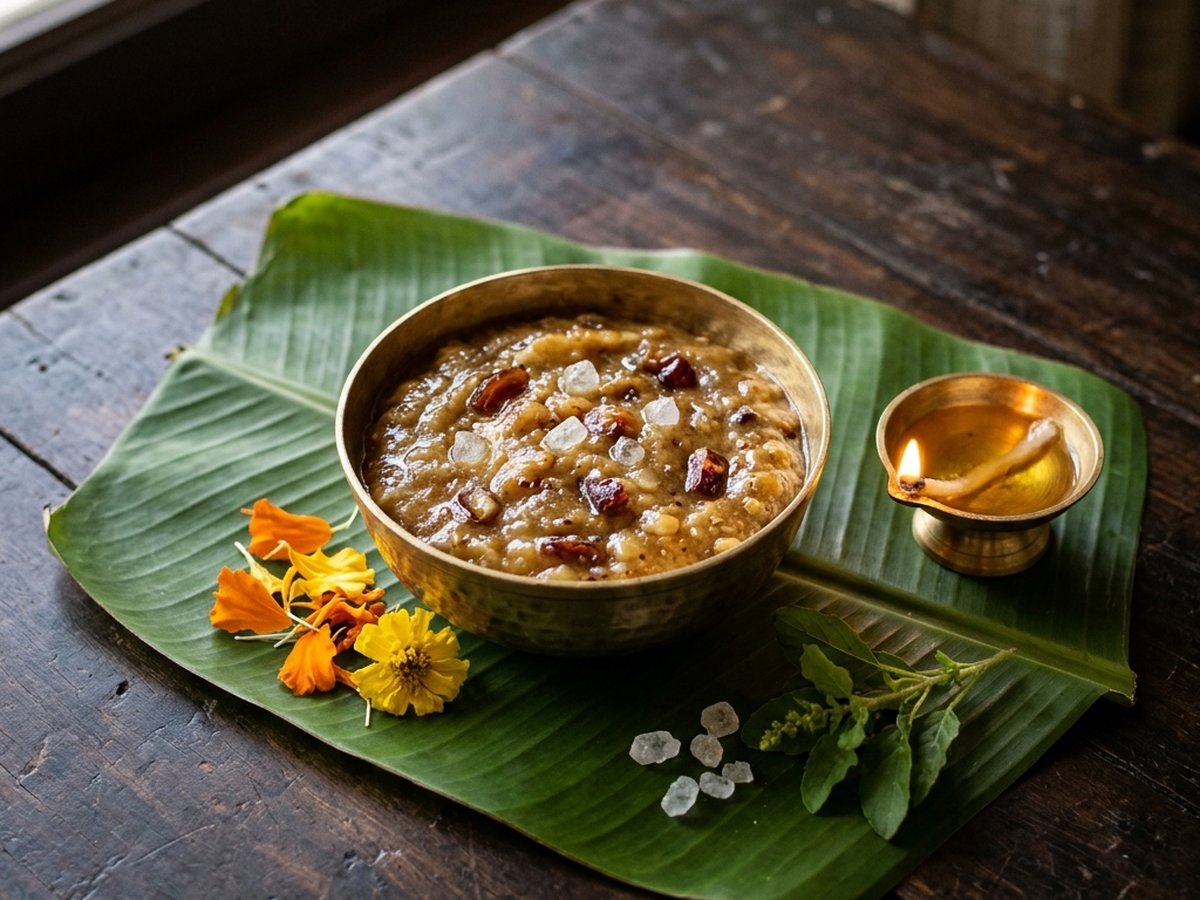
🍯 Traditional Kovil Panchamritam
⚖️ Banana : Jaggery/Sugar Candy : Honey : Ghee : Dates = 5 : 2 : 1 : 0.5 : 1⏱️ Prep 20 min · No cooking
Ingredients & Proportions:
- 5 ripe hill bananas (Malai Pazham or Cavendish)
- 1/2 cup pure organic jaggery or rock candy (Kalkandu)
- 3 tbsp raw honey
- 2 tbsp pure cow ghee
- 1/4 cup chopped seedless dates (Perichampazham)
- 1/4 tsp green cardamom powder
- 1 microscopic pinch edible camphor (Pachai Karpooram)
Method & Procedure:
- Peel the ripe bananas and mash them thoroughly using clean hands or a wooden masher into a chunky pulp.
- Fold in powdered jaggery or rock candy and mix until incorporated.
- Add chopped dates, raw honey, and melted cow ghee. Blend gently.
- Finish with freshly crushed cardamom powder and the tiniest speck of edible camphor.
- Offer directly on a fresh betel leaf before the Shiva Lingam during the Nishita Kala puja.
Preservation Secret: Authentic temple panchamritam contains zero added water. Because honey, ghee, and jaggery act as natural preservatives, it can stay fresh for months without refrigeration.
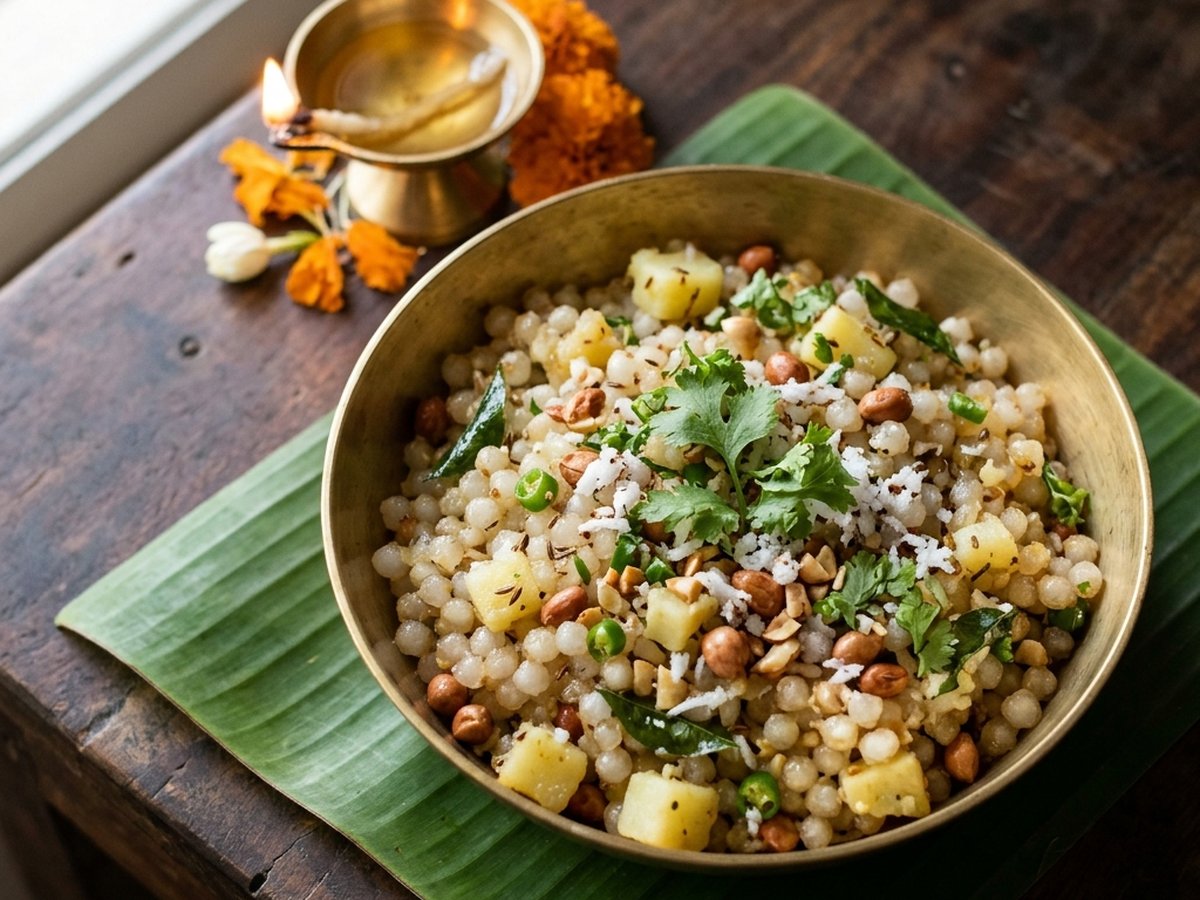
🍯 Phalahari Sabudana Khichdi (Vrat Recipe)
⚖️ Sabudana : Crushed Peanuts : Potatoes = 1 cup : 0.5 cup : 1 medium⏱️ Prep 4 hr 10 min · Cook 15 min
Ingredients & Proportions:
- 1 cup sago pearls (Sabudana, rinsed and soaked in equal water for 4 hours until pearls are soft and separate)
- 1/2 cup roasted peanuts coarsely crushed
- 1 boiled potato cubed
- 1 tsp cumin seeds, 2 green chillies slit, 1 sprig curry leaves
- 1 tbsp cow ghee, 1 tsp Sendha Namak (rock salt), 1 tsp lemon juice
Method & Procedure:
- Drain soaked sabudana completely; ensure pearls are dry and non-sticky when pressed between fingers.
- Toss crushed roasted peanuts, salt, and sabudana together in a bowl.
- Heat ghee in a pan; add cumin seeds, green chillies, and curry leaves.
- Add cubed potatoes and sauté for 1 minute.
- Add the sabudana-peanut mix; sauté on low flame, stirring gently for 3-4 minutes until pearls turn translucent.
- Sprinkle lemon juice and fresh coriander; remove from heat immediately (overcooking makes sabudana gummy).
Non-Sticky Secret: Washing sabudana 3-4 times removes surface starches. Soaking in EXACTLY equal volume of water prevents clumps.
Sacred Threshold Art Blueprint: Kolam & Rangoli
📐 Shiva Trishula & Bilva Patra Padmam Kolam
📐 Grid Pattern / Dot Matrix: 7 to 1 Ner Pulli (Straight dots) or 8-petal Lotus with central TridentDrawing Sequence:
- Clean the puja space and smear with light vibhuti water or turmeric wash.
- Draw an 8-petal Lotus (Ashta Dala Padmam) representing the eight cosmic forms of Shiva (Ashtamurti).
- Inside the central circle, draw the vertical sacred Trident (Trishula) representing Satva, Rajas, and Tamas transcended.
- Inscribe the horizontal Damaru (cosmic drum of sound) across the shaft of the trident.
- Adorn each of the eight petals with a trifoliate Bilva leaf motif.
- Outline the complete diagram with sacred Vibhuti (holy ash) or white rice flour and red kaavi.
Drawing the Trishula Kolam purifies the environment of lower astral energies, aligning the home with the transcendent stillness of Mount Kailash. The three prongs of the trident awaken Ida, Pingala, and Sushumna nadis during midnight meditation.
Sacred Snanam & Pitru Tharpanam Protocol
🌊 Maha Shivaratri 4-Prahar Abhishekam & Night-Long Jagaran Protocol
- 1. Dawn Snanam & Sankalpam: Bathe in morning, wear clean clothes (rudraksha and vibhuti), and take the Shivaratri Vrat Sankalpam to observe fasting and night vigil.
- 2. First Prahar (approx 06:00 PM - 09:00 PM): Milk Abhishekam, offer Bilva leaves with Rigveda slokas / 'Om Namah Shivaya'.
- 3. Second Prahar (approx 09:00 PM - 12:00 AM): Curd Abhishekam, offer Chandan and flowers with Yajurveda hymns.
- 4. Third Prahar (approx 12:00 AM - 03:00 AM; the Nishita window around midnight, shown on this page, falls across the end of the second prahar and the start of the third): Ghee & Honey Abhishekam. Recite Sri Rudram and Chamakam. This is the zenith of Shivaratri when Shiva manifested as the pillar of light!
- 5. Fourth Prahar (approx 03:00 AM - 06:00 AM): Sugarcane juice / Tender coconut water Abhishekam, camphor arati, and dawn sunrise pranam.
- 6. Parana (Breaking Fast): Complete morning bath next day, perform short puja, and break fast before sunset after ensuring Chaturdashi has concluded or as per panchangam rules.
Skanda Purana and Shiva Purana declare: Remaining awake (Jagaran) and worshipping the Lingam during the 4 Prahars, especially Nishita Kala, burns karmic impressions of thousands of lifetimes. Offering even a single unbroken Bilva leaf at midnight bestows the merit of performing a thousand Ashvamedha Yajnas.
Fasting & All-Night Vigil (Jagran) Protocols
- Ideal Vrat: Nirjala (complete waterless fasting for 24 hours from sunrise to the next sunrise).
- Mild Vrat: Water, milk, fruits, and herbal tea for those with health constraints.
- Complete abstinence from sleep during the entire night (Jagran); spend the night listening to Shiva Kathas, chanting, and meditation.
- Offering even a single unbroken three-leaf Bilva stem with devotion wipes away the negative impressions of three lifetimes.
The fast is broken (Parana) on the morning following Shivaratri after sunrise, subsequent to taking a morning bath, performing brief Shiva puja, and feeding the needy.
The 4 Prahars of the Maha Shivaratri Night
Prahar 1 (Evening Dusk: approx. 6:00 PM - 9:00 PM)
Governed by the Rigveda. Shiva is bathed with raw milk and smeared with chandan (sandalwood), symbolising peace.
- Milk Abhishekam
- Chandan application
- Lotus flower offering
Prahar 2 (Late Night: approx. 9:00 PM - 12:00 AM)
Governed by the Yajurveda. Shiva is bathed with yogurt/curd, pacifying material desires.
- Curd Abhishekam
- Bilva leaf archana
- Sri Rudram recitations
Prahar 3 (After Midnight: approx. 12:00 AM - 3:00 AM)
Governed by the Samaveda. The supreme moment when the infinite pillar of fire manifested. Bathed with ghee and honey.
- Ghee and Honey Abhishekam
- Lingodbhava darshanam
- Bilvashtakam chanting
Prahar 4 (Pre-Dawn Twilight: approx. 3:00 AM - 6:00 AM)
Governed by the Atharvaveda. Bathed with sugarcane juice and tender coconut, concluding with radiant Bhasma aarti.
- Sugarcane juice Abhishekam
- Vibhuti alankaram
- Maha Mangala Aarti
Pan-Indian Shivaratri Traditions
📍 Tamil Nadu & South India
Maha Shivaratri
All-night 4-Prahar temple abhishekams at Thanjavur, Chidambaram, and Tiruvannamalai Girivalam (circumambulating Arunachala hill).
📍 Varanasi & North India
Kashi Vishwanath Shivaratri
Lakhs take holy dip in River Ganga before visiting Kashi Vishwanath; grand Shiva-Baraat wedding processions.
📍 Kashmir
Herath (Har-ratri)
Vatuk Bhairav worship using filled water pots adorned with walnuts distributed as sanctified prasad.
📍 Gujarat & Central India
Somnath & Mahakaleshwar Jyotirlinga
Bhasma Aarti at Ujjain Mahakaleshwar with ancient continuous sacred ash rituals.
Diaspora Living Guide: All-Night Jagran in Apartments Overseas
- Apartment Linga Abhishekam: Place a spatika or stone Linga inside a deep plate or copper tray so liquids (milk, water, honey) are contained without spilling onto living room carpets.
- Sourcing Bilva Leaves Overseas: Fresh Bilva leaves are rarely stocked in Western supermarkets. Check local Hindu temples, or use dried Bilva leaves rehydrated in water, or offer unbroken fragrant flowers with the mental thought of Bilva.
- Workplace Scheduling: If Shivaratri falls on a weekday, take a personal day off or half-day on the following morning so you can honor the all-night vigil without hazardous driving on zero sleep.
Modern Apartment Living & Emergency Substitutions
Nishita Kala Zenith & Fasting Variations: Unlike other festivals anchored to sunrise (Udaya Vyapi), Maha Shivaratri strictly requires Chaturdashi Tithi during Nishita Kala (local midnight). Fasting levels: (1) Nirjala (without water) for intense sadhakas; (2) Sajala (water and milk); (3) Phalahar (fruits, sabudana, milk) for families and elders. Sleep is abstained to maintain the spine erect, facilitating the natural upward surge of spiritual energy (Kundalini) on this night.
🏢 Apartment-Safe Hacks & Diaspora Solutions
- No Fresh Bilva Leaves in Diaspora? Offer unbroken raw rice grains mixed with sandalwood paste, mentally offering them as Bilva Patra with the Bilvashtakam prayer. Shastras state: 'Bhavena labhyate sarvam' (Devotion fulfills all).
- Apartment Drain / Abhishekam Constraints? Place the Shiva Lingam inside a wide silver or stainless steel thali. Collect the panchamritam dravyas neatly in bowls as divine prasad, leaving zero mess.
- No Stone Shiva Lingam? Use a Sphatika (quartz) lingam, brass lingam, or even shape a temporary Lingam out of fresh clay, river sand, or rice paste (Parthiva Lingam).
- Working Next Day? If complete 4-Prahar Jagaran is not feasible due to work, prioritize the midnight Nishita window shown on this page, which tradition holds to be the most important part of the night.
Spiritual Significance: The Cosmic Pillar of Fire & The Mind's Dissolution
In the Shiva Purana, Brahma (creator) and Vishnu (preserver) disputed their supremacy. Suddenly, an incomprehensible, infinite pillar of radiant fire (Jyotirlinga) pierced through all dimensions. Neither could discover its summit or base. This cosmic fire was Shiva — representing the unmanifest, infinite Absolute Consciousness beyond birth and demise.
Astronomically and psychologically, the Moon represents the human mind (Chandrama Manaso Jatah). On Krishna Chaturdashi, the Moon is reduced to its final slender sliver — only 1/16th remains. By keeping the senses alert and focused on Shiva during this darkest night, the turbulent mind completely dissolves into pure transcendental peace. That is the true mystery of Maha Shivaratri.
Frequently Asked Questions About Maha Shivaratri
Why is Maha Shivaratri celebrated on different dates between the US and India in some years? ▾
Because Shivaratri is anchored to local midnight (Nishita Kala). If the 14th waning tithi (Chaturdashi) touches midnight in Dallas but expires before midnight in India, the fast is observed on different calendar dates.
What is the significance of the 3-leaf Bilva stem? ▾
The three leaflets represent the three Gunas (Sattva, Rajas, Tamas), the three eyes of Shiva (Trinetra), and the three prongs of the Trishula. Offering it symbolizes surrendering our physical, mental, and causal bodies to God.
Can women chant Sri Rudram during Shivaratri? ▾
Devotees of all backgrounds can lovingly chant 'Om Namah Shivaya', the Maha Mrityunjaya Mantra, and Shiva Panchakshara Stotram with devotion.
See Your City's Panchangam for the Day
This page shows the Maha Shivaratri date and Nishita window for each city it lists. For any other day: tithi, nakshatra, sunrise, sunset and Rahu Kalam for your city.
Open Your City's Panchangam →