
Sharad Navratri & Dussehra 2027: Dates, Ghatasthapana & Vijayadashami Guide in Chennai
The definitive 9-night celebration of the Divine Mother: Ghatasthapana muhurtham, Golu steps, Garba, Durga Puja, Ayudha Puja, and Vijayadashami victory.
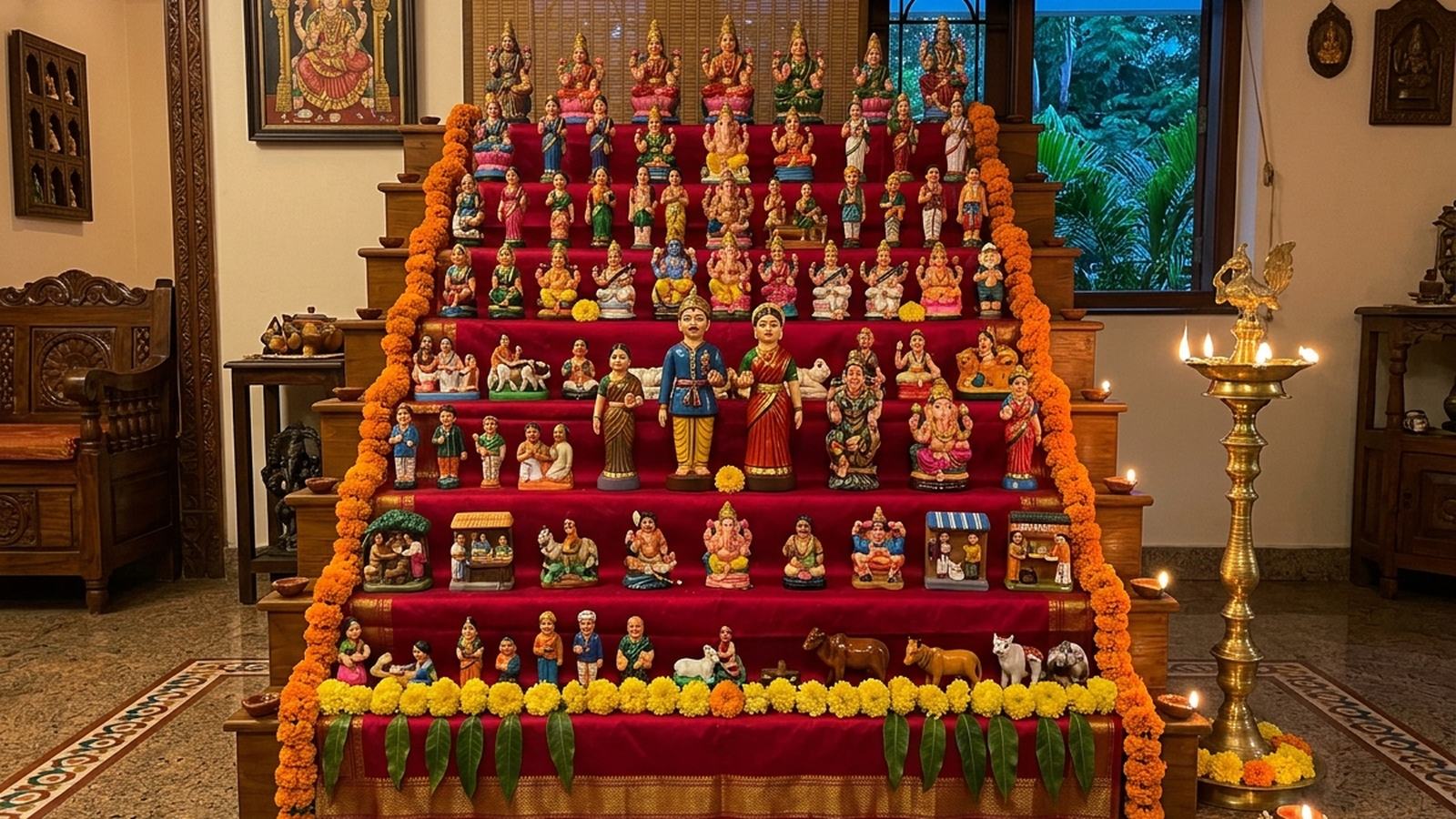
Sharad Navratri honors the nine manifestations of Supreme Shakti (Navadurga) battling the demonic forces of Mahishasura. Beginning on Ashwina Shukla Pratipada with Ghatasthapana (sacred pot installation) and concluding on Vijayadashami (Dussehra), the 10-day period unites diverse cultural traditions: South Indian Bommai Golu (doll arrangements) and Ayudha Puja, Gujarati Garba and Dandiya Raas, Bengal's grand Durga Puja, and Northern Ramlila celebrating Lord Rama's victory over Ravana.
City Timings
Astronomical Geometry & The Ghatasthapana Nirnaya Rule
Sharad Navratri begins on the first lunar day (Pratipada) of the waxing fortnight of Ashwina month. The most critical timing rule governs **Ghatasthapana** (Kalasha Sthapana) on Day 1: classical texts dictate that the Kalasha must be installed during the morning hours (first one-third of daytime) while Pratipada prevails.
Tradition holds that Ghatasthapana should avoid **Chitra Nakshatra** and **Vaidhriti Yoga**. If Pratipada coincides with either, the installation is deferred to the auspicious **Abhijit Muhurtham** (centered on solar noon). Vijayadashami (Dussehra) is celebrated on the 10th tithi (Dashami) when it prevails during **Aparahna Kala** (afternoon), the auspicious time when Lord Rama vanquished Ravana and Goddess Durga slew Mahishasura.
The date shown on this page is the Navaratri start as Nava Panchangam's shipped rule computes it: the day, in the lunar month Ashvina, on which Shukla Pratipada is current at sunrise. When Pratipada is current at TWO sunrises it is the first of them, and when it touches no sunrise at all it is the day Pratipada begins. The morning window shown is the first fifth of daylight in your city. Nava Panchangam does not check Chitra nakshatra or Vaidhriti yoga for this window, so check those yourself; Vijayadashami is not dated on this page.
Luni-Solar Calendar Bridge: Ashvina Shukla Paksha Alignment
Ashvina Shukla Pratipada to Dashami (South & Western India)
Ashvina Shukla Pratipada to Dashami (North India)
Since Sharad Navratri commences on the 1st tithi (Pratipada) of Shukla Paksha immediately after Mahalaya Amavasya, both North (Purnimanta) and South (Amanta) calendars call this sacred period Ashvina. Both systems give the 9 nights of the Devi and Vijayadashami the same month name; the civil day each tithi falls on can still differ from city to city.
Geodetic Vedic Sankalpam & Spatial Alignment
📍 Geodetic Vedic Sankalpam Studio
🌌 Traditional place clause: Jambu Dvīpe, Bhārata Varshe, Bhārata Khaṇḍe, Meroḥ Dakṣiṇa DigbhāgeRecite at the beginning of puja to orient your prayer in cosmic spacetime (Kāla-Deśa-Pātra):
Sacred Samagri & Interactive Shopping Checklist
Check off gathered items (saved automatically to your browser) or share the remaining list with your family via WhatsApp.
🪆 Golu Stand & Kalasam Essentials
🌸 Botanicals & Suhasini Tamboolam
🥗 9-Day Sundal & Sweet Grocery Pantry
📚 Ayudha & Saraswati Puja Items
Step-by-Step Puja Vidhi & Aradhana Procedure
🪔 Sacred Procedure
- Step 1 (Day 1 Morning): Clean the altar, sow Navadhanya in a clay plate, fill the Kalasha with sanctified water, herbs, and coins, cap with mango leaves and coconut.
- Step 2: Install the Kalasha during the city's auspicious Ghatasthapana window with Vedic mantras invoking Goddess Durga.
- Step 3 (Days 1–3): Worship the Goddess as Maha Durga (removing fear, negativity, and obstacles). Offer red flowers and chickpeas sundal.
- Step 4 (Days 4–6): Worship the Goddess as Maha Lakshmi (bestowing spiritual and material wealth). Offer lotus flowers and sweet appam.
- Step 5 (Days 7–9): Worship the Goddess as Maha Saraswati (bestowing wisdom, fine arts, and memory).
- Step 6 (Maha Navami / Ayudha Puja): Place all professional tools, vehicles, musical instruments, and children's study books at the altar for divine blessing.
- Step 7 (Vijayadashami): Celebrate victory, start new ventures, conduct Vidyarambham (Aksharabhyasam for toddlers), and dismantle the Kalasha with prayers.
Authentic Naivedyam Prasadam Recipes
Traditional proportions, temple-style techniques, and time-honored omens passed down through generations.
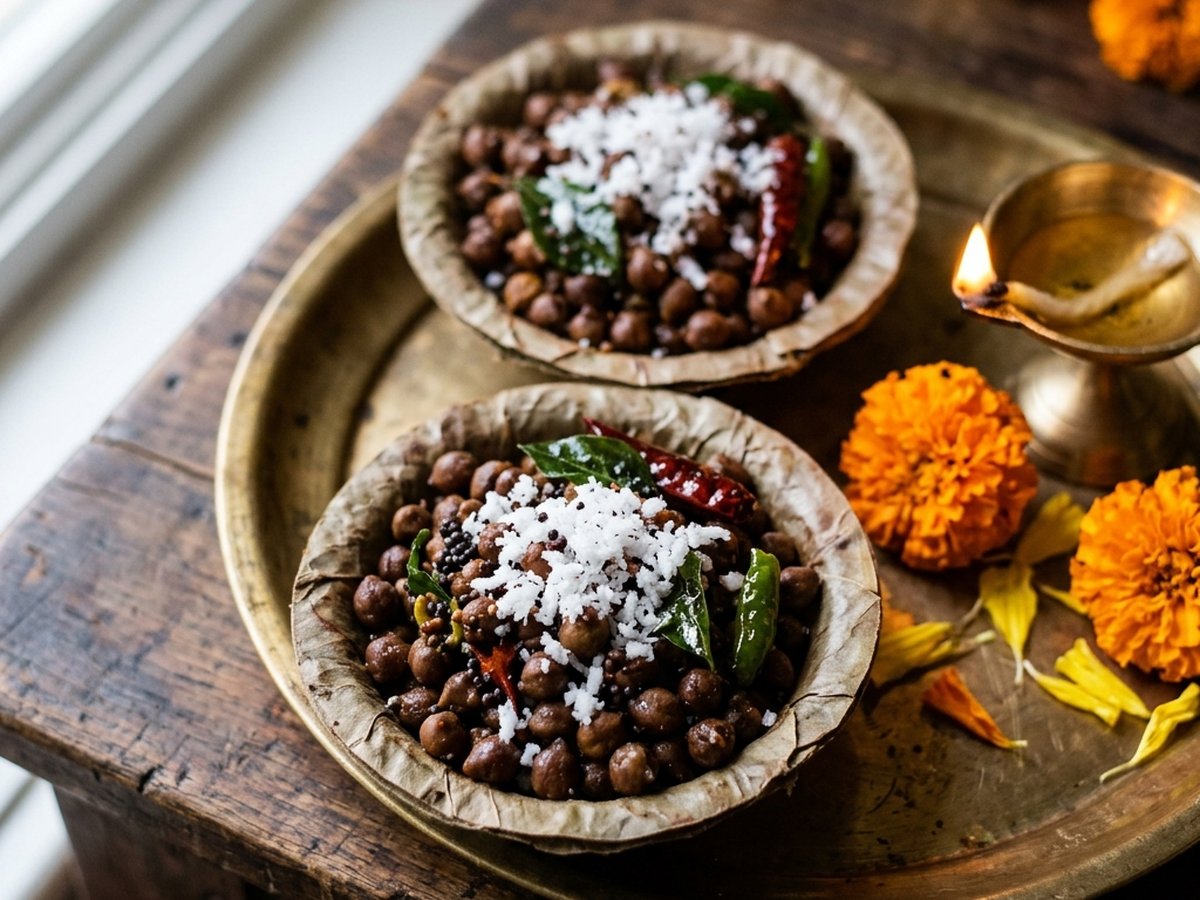
🍯 Traditional Navratri Sundal (Universal Authentic Method)
⚖️ Pulse/Legume : Fresh Coconut : Tempering Ghee = 1 cup dry : 3 tbsp : 1 tbsp⏱️ Prep 8 hr 5 min · Cook 25 min
Ingredients & Proportions:
- 1 cup selected pulse (e.g., Kala Chana / Karamani / Pachai Payaru)
- 3 tbsp fresh grated coconut
- 1 tbsp coconut oil or cow ghee
- 1 tsp mustard seeds & 1 tsp urad dal
- 2 dried red chillies broken & 1 green chilli slit
- 1 sprig fresh curry leaves & 1/4 tsp pure asafoetida (Hing)
- 1 tsp rock salt (or Sendha Namak)
Method & Procedure:
- For whole dried legumes (Chana, Rajma, Karamani): Soak in water for 6-8 hours. Pressure cook with salt for 4-5 whistles until soft when pressed between fingers but intact (never mushy). For split dals (Moong dal, Chana dal): Soak only 30-45 minutes and steam in a pot until tender.
- Drain cooking water thoroughly through a colander so no moisture remains.
- Heat coconut oil or ghee in a pan over medium heat. Add mustard seeds and let them crackle vigorously.
- Add urad dal and toast until golden. Add dried red chillies, slit green chilli, curry leaves, and generous hing.
- Add the drained cooked legume and stir-fry on medium flame for 2 minutes until spices evenly coat every bean.
- Turn off heat completely. Scatter fresh grated coconut over the top and gently fold. Offer warm as Devi Naivedyam before distributing as Prasad to guests.
Texture Secret: Never overcook the pulses into mush. Adding coconut AFTER turning off the stove preserves its sweet raw enzymes and prevents souring.
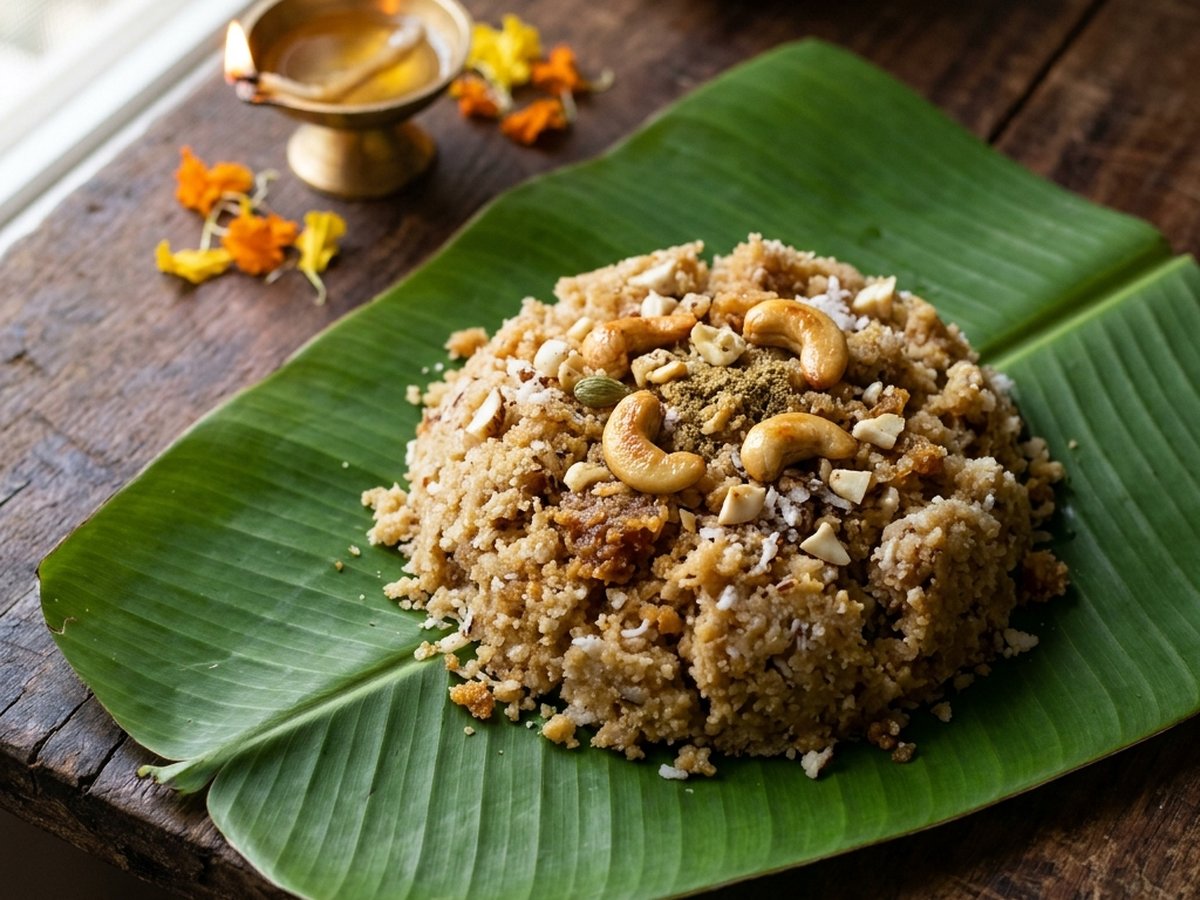
🍯 Traditional Sweet Arisi Puttu (Navratri Day 2 Naivedyam)
⚖️ Raw Rice Flour : Jaggery : Grated Coconut = 1 cup : 0.75 cup : 0.5 cup⏱️ Prep 20 min · Cook 25 min
Ingredients & Proportions:
- 1 cup fine raw rice flour (dry roasted to fragrant sandy texture)
- 3/4 cup organic powdered jaggery
- 1/2 cup fresh grated coconut
- 2 tbsp pure cow ghee & 10 fried cashews
- 1/4 tsp cardamom powder & pinch of edible camphor
- Warm water mixed with a pinch of turmeric and salt for sprinkling
Method & Procedure:
- Dry roast rice flour on low flame for 4 minutes until warm and sandy. Cool slightly.
- Sprinkle warm turmeric-salt water tablespoon by tablespoon into flour, rubbing with fingertips until flour becomes damp breadcrumbs (when squeezed in fist it holds shape, but crumbles easily when tapped).
- Steam in a preheated steamer on a damp muslin cloth for 10-12 minutes until cooked and aromatic.
- Boil jaggery with 1/4 cup water until soft-ball syrup stage (when dropped in cold water it forms a soft pliable ball).
- Pour warm syrup into the steamed puttu flour, mixing gently with a fork to break lumps.
- Stir in fresh coconut, fried cashews in ghee, and cardamom powder.
Devi's Beloved: Puttu represents maternal tenderness and is the supreme offering on Shukla Dvitiya (Brahmacharini aradhana).
Sacred Threshold Art Blueprint: Kolam & Rangoli
📐 9-Day Progressive Kolam & Saraswati Hridayakamala Yantra
📐 Grid Pattern / Dot Matrix: Progressive geometric designs culminating in the 8-petal Hridayakamala lotus on Saraswati PujaDrawing Sequence:
- Day 1: Simple unbroken linear patterns using raw rice flour (Bindu/Rekha).
- Day 2: Square grid patterns (Kattam) symbolizing stability and the earth element.
- Day 3: Flower motifs using pearl dot grid (Muthu Pulli).
- Day 4: Intricate step-lattice kolam (Vadi Pulli).
- Day 5: Stylized bird or peacock kolam (Mayil Kolam) for Skandamata.
- Day 6: 16-petal lotus (Shodasha Dala Padmam) for Katyayani.
- Day 7: Flute, Veena, or bow-arrow motif for Kalaratri.
- Day 8: Sacred Lotus (Mahagauri Padmam) lined with vibrant red kaavi.
- Day 9 / 10: Saraswati Hridayakamalam (continuous interlocking knot lines that start and end at the same point without breaking) drawn before books and instruments.
The 9-day progression mirrors the spiritual evolution of the soul from gross matter (Day 1) to supreme intellectual and spiritual illumination (Saraswati on Day 9). The continuous knot kolam binds divine auspiciousness permanently into the household.
Sacred Snanam & Pitru Tharpanam Protocol
🌊 Mahalaya Amavasya Transition to Navratri Ghatasthapana Sequencing
- 1. Preceding Day (Mahalaya Amavasya): Conclude Pitru Paksha with Aparahna Pitru Tharpanam. Cleanse and sanctify the home thoroughly after midday.
- 2. Navratri Day 1 Dawn (Shukla Pratipada): Rise at Brahma Muhurtham, perform purifying snanam, and complete morning Sandhyavandanam.
- 3. Auspicious Ghatasthapana Window: Perform Ghatasthapana strictly during the calculated auspicious muhurtham (Abhijit Muhurtha or morning Dvisvabhava Lagna). CRITICAL RULE: Avoid Chitra Nakshatra and Vaidhriti Yoga windows as explicitly cautioned in Devi Bhagavatam.
- 4. Kalasa Avahana & Golu Lighting: Invoke Devi into the Kalasam, light the Akhanda Deepam (continuous oil lamp), and illuminate the Golu steps.
Dharma Sindhu dictates: 'Chitra-vaidhriti-varjite pratah-kale ghatasthapanam kuryat.' Establishing the sacred pot during forbidden astral combinations brings distress, whereas establishing during Abhijit Muhurtha ensures victory, prosperity, and spiritual sovereignty.
Vrat Protocols & Daily Observances
- Many devotees observe a single grainless meal a day (Phalahari) or fast on milk, fruits, and buckwheat/samvat rice.
- Complete abstention from alcohol, non-vegetarian food, onion, and garlic.
- Perform daily evening Lalitha Sahasranama or Devi Mahatmyam (Durga Saptashati) parayanam.
- Invite women and young girls (Kanya Puja) into the home, offering Kumkum, betel leaves, glass bangles, gifts, and freshly made Sundal.
The Navratri fast concludes on Vijayadashami morning following the final immersion (Visarjan) of the sprouted seedlings and ceremonial movement of the Kalasha slightly northward.
The 9 Manifestations of Goddess Durga (Navadurga)
Day 1: Shailaputri (Daughter of the Mountain)
Riding a bull, holding a trident and lotus. Embodiment of patience, grounding, and devotion.
- Ghatasthapana
- Yellow or white flower offerings
- Sundal naivedyam
Day 2: Brahmacharini (The Ascetic Penance)
Barefoot, holding a rosary and water pot. Symbol of steadfast discipline and spiritual austerity.
- Japa of Gayatri / Navarna mantra
- Sugar / fruits offering
Day 3: Chandraghanta (The Radiant Warrior)
Riding a tiger with a half-moon on her forehead. Dispels fear and demonic negativity.
- Milk and kheer offering
- Bells and aarti
Day 4: Kushmanda (The Cosmic Creator)
Possessing eight arms; creator of the cosmic universe through her radiant smile.
- Malpua / sweet appam offering
- Green cloth offering
Day 5: Skandamata (Mother of Lord Murugan/Kartikeya)
Holding infant Skanda; bestows motherly love, protection, and wisdom.
- Banana offering
- Murugan and Lalitha chants
Day 6: Katyayani (The Fierce Warrior Form)
Manifested from the combined brilliance of the Gods to slay Mahishasura.
- Honey and pomegranate offering
- Overcoming relationship obstacles
Day 7: Kalaratri (The Destroyer of Darkness)
Dark-complexioned, riding a donkey; fiercest destroyer of ego and black magic.
- Jaggery naivedyam
- Saraswati Avahana in South India
Day 8: Mahagauri (Radiance & Purity)
Dressed in white, riding a white bull. Bestows inner peace, purification, and forgiveness.
- Durga Ashtami Sandhi Puja
- Coconut naivedyam
- Kanya Puja for 9 young girls
Day 9: Siddhidatri (Giver of Supernatural Perfections)
Seated upon a lotus, bestowing all 8 Siddhis and 9 Nidhis. Maha Navami & Ayudha Puja.
- Ayudha Puja tool worship
- Saraswati Puja
- Sesame and halwa offering
Pan-Indian Navratri Traditions
📍 Tamil Nadu, Karnataka & Andhra
Bommai Golu & Ayudha Puja
9-step doll exhibition (Golu), inviting neighborhood women for vetrilai-paakku, and Ayudha Puja vehicle worship.
📍 Gujarat & Western India
Garba & Dandiya Raas
All-night circle dancing around an earthen lamp (Garbha deepa) celebrating cosmic life energy.
📍 West Bengal & Eastern India
Durga Puja (Pujo)
Mammoth artistic pandals, Dhunuchi Naach incense dancing, Sindoor Khela on Dashami, and UNESCO intangible cultural heritage status.
📍 North India & Mysuru
Ramlila & Mysuru Dasara
Burning giant effigies of Ravana, Kumbhakarna, and Meghanada; the golden howdah procession of Chamundeshwari in Mysuru.
Diaspora Living Guide: Setting Up Golu & Garba Overseas
- Apartment Golu Steps: Use collapsible cardboard or plastic steps available at Indian grocery stores or online, or drape a sturdy coffee table and shelves with a traditional silk saree.
- Ayudha Puja for Professionals: In modern tech hubs (Dallas, Silicon Valley, London), place work laptops, notebooks, car keys, and children's school supplies before Goddess Saraswati for blessings of intellect.
- Community Garba: Many diaspora associations host indoor stadium Garba/Dandiya events on weekends during the 9-day span.
Modern Apartment Living & Emergency Substitutions
Golu 9-Padi Hierarchy & Regional Synergy: South Indian Bommai Golu traditionally follows a 9-step hierarchy of cosmic evolution: Top Steps (1-3): Supreme Gods, Goddesses, Kalasam, and Trimurti. Middle Steps (4-6): Gurus, rishis, saints (Adi Shankara, Ramanuja, Alwars, Nayanmars), and Avatars (Dasavataram). Lower Steps (7-8): Kings, royal courts, merchants (Chettiar dolls), and traditional village occupations. Bottom Step (9): Marapachi wooden couple, animals, birds, and children's toys. In Gujarat and Maharashtra, Navratri is celebrated with vibrant Garba and Dandiya Raas honoring the divine feminine power. In Bengal, Durga Puja culminates from Shashti to Dashami with Dhunuchi dance, Sindoor Khela, and grand Pandals.
🏢 Apartment-Safe Hacks & Diaspora Solutions
- No Traditional Golu Stand? Create a 3 or 5-tier display using sturdy cardboard cartons, stacked books, or modular storage cubes covered with a clean white or silk bedsheet.
- Ayudha Puja for Modern Knowledge Workers? Bless laptops, smartphones, design tools, car keys, and work monitors with sandalwood paste and flowers — your career implements are your divine instruments of dharma!
- Missing 9 Types of Pulses? Prepare chana sundal or moong dal sundal on alternate days; offering soaked and tempered canned chickpeas (rinsed well) saves hours of prep time in busy workweeks.
- Apartment Continuous Lamp (Akhanda Deepam) Safety? Use a small brass deepam placed inside a protective glass hurricane chimney or a wide stainless steel platter, or keep a 9-day electric oil lamp flickering on the altar.
Spiritual Significance: The 9-Stage Ascent of Consciousness
The nine nights of Navratri represent the systematic spiritual evolution of the human soul. The first three days (Durga) are dedicated to the destruction of negative tendencies: anger, jealousy, indolence, and lust. Once the mind is cleansed of weeds, the second three days (Lakshmi) cultivate positive virtues: generosity, devotion, gratitude, and equanimity.
Finally, the last three days (Saraswati) awaken pure divine wisdom, insight, and self-realization. Vijayadashami is the culmination: when ignorance is conquered by wisdom, victory (Vijaya) becomes effortless and permanent.
Frequently Asked Questions About Navratri & Dussehra
Why is Ghatasthapana forbidden during Chitra Nakshatra and Vaidhriti Yoga? ▾
Classical Muhurtha texts state that Chitra nakshatra and Vaidhriti yoga carry aggressive, conflicting cosmic energies unfavorable for establishing the peaceful seat of Devi. If unavoidable, Abhijit Muhurtham is utilized as a divine override.
Why do we arrange dolls in odd-numbered steps (Padis) for Golu? ▾
In Vedic numerology, odd numbers (3, 5, 7, 9, 11) represent dynamism, growth, and continuous cosmic evolution, whereas even numbers represent completed stillness.
What is the significance of Vidyarambham on Vijayadashami? ▾
Vijayadashami is inherently auspicious for starting any education. Toddlers are initiated into writing their first alphabet (typically 'Hari Sri Ganapataye Namaha') on a tray of raw rice or sand.
See Your City's Panchangam for the Day
This page shows the Navaratri start date and morning window for each city it lists. For any other day, including Vijayadashami: tithi, nakshatra, sunrise, sunset and Rahu Kalam for your city.
Open Your City's Panchangam →