
Raksha Bandhan 2027: Date, Rakhi Tying Muhurtham & The Bhadra Rule in New York City
A guide to the bond of sibling love and protection: the afternoon (Aparahna) window for your city, the Bhadra rule, traditional Aarti, and Upakarma significance.
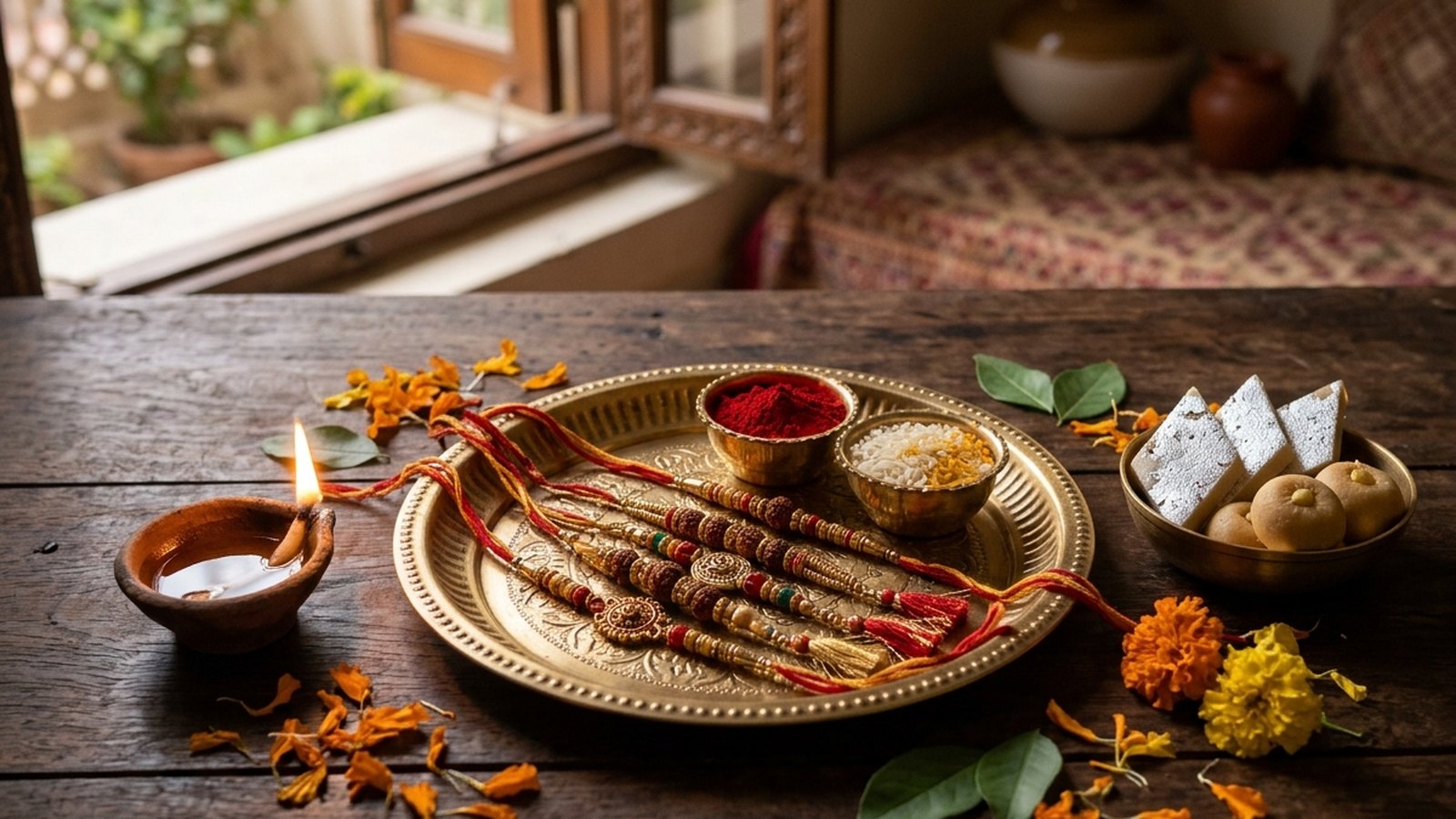
Raksha Bandhan ('The Bond of Protection') is celebrated on Shravana Purnima. Sisters tie a sacred protective thread (Rakhi) around their brothers' right wrists, applying a vermilion tilak and praying for their longevity and prosperity. Brothers reciprocate with gifts and an enduring pledge to protect their sisters. Scriptural law strictly requires tying the Rakhi during **Aparahna Kala** or Pradosha, strictly excluding the inauspicious **Bhadra** period.
City Timings
Astronomical Geometry & The Strict Bhadra Timing Rule
In Vedic astrology, Raksha Bandhan falls on the Full Moon day (Purnima) of the sacred month of Shravana. The primary scriptural mandate governs the avoidance of **Bhadra** (Vishti Karana), which frequently dominates the first half of Purnima.
Ancient texts, including *Vratraj* and *Nirnaya Sindhu*, explicitly warn: *'Na bhadrayam dvidharaksham'* — under no circumstances should Rakhi be tied during Bhadra. According to tradition, Ravana's sister tied Rakhi to him during Bhadra, which led to the complete destruction of his kingdom within the year. The ideal window is **Aparahna** (the 4th part of daytime, afternoon). If Bhadra covers Aparahna, the ceremony is performed during evening **Pradosha** after Bhadra has expired.
The date shown on this page is the Yajur Veda Upakarma (Avani Avittam) day as Nava Panchangam's shipped rule computes it: the day, in the lunar month Shravana, that owns Purnima by the 12-nazhigai rule: the last day on whose sunrise Purnima stands, if it still runs at least 12 nazhigai (4 h 48 min) past that sunrise, else the day before (and when it stands at no sunrise, the day it begins). Raksha Bandhan is usually kept on the same day. The window shown is the aparahna for your city; Nava Panchangam does not compute Bhadra, so check that Bhadra has ended before tying the rakhi.
Luni-Solar Calendar Bridge: Shravana Purnima Across India
Shravana Shukla Purnima (South & Western India / Maharashtra / Gujarat)
Shravana Shukla Purnima (North India / Rajasthan / Punjab)
Because Raksha Bandhan is observed on the full moon (Purnima) day of the lunar month Shravana, both Purnimanta and Amanta systems agree on the lunar month and tithi: Shravana Shukla Purnima. In North India, it is primarily celebrated as the festival of sibling protection (Raksha Bandhan). In South India, the same full moon is usually observed as Avani Avittam (Yajur Veda Upakarma), where sacred threads are renewed in the morning.
Geodetic Vedic Sankalpam & Spatial Alignment
📍 Geodetic Vedic Sankalpam Studio
🌌 Traditional place clause: Krauñca Dvīpe, Ramaṇaka Varshe, Aindra Khaṇḍe, Meroḥ Paścima DigbhāgeRecite at the beginning of puja to orient your prayer in cosmic spacetime (Kāla-Deśa-Pātra):
The dvipa-varsha-khanda clause for places outside Bharata follows one reckoning among several and is awaiting review by our astrologer. The remaining clauses are computed by the panchangam engine.
Sacred Samagri & Interactive Shopping Checklist
Check off gathered items (saved automatically to your browser) or share the remaining list with your family via WhatsApp.
🧵 Sacred Rakhi Thali Essentials
🪢 Yajurveda Upakarma / Avani Avittam Kit
🥥 Sweet Barfi & Peda Groceries
Step-by-Step Puja Vidhi & Aradhana Procedure
🪔 Sacred Procedure
- Step 1: Set up the puja thali with Rakhi, Kumkum, Akshat, sweets, and a lit ghee lamp once Bhadra has ended (check a local almanac for its end time).
- Step 2: The brother sits facing east or north; sister applies a fragrant vermilion tilak onto his forehead with unbroken rice grains.
- Step 3: Sister ties the sacred Rakhi thread around the brother's right wrist while chanting the protective Raksha mantra.
- Step 4: Sister performs a gentle clockwise Aarti of the brother to ward off negative influences (Drishti).
- Step 5: Sister feeds a piece of sweet to the brother, wishing him health, victory, and long life.
- Step 6: Brother offers a gift of appreciation, touches elder sister's feet for blessings (or blesses younger sister), promising eternal support.
Authentic Naivedyam Prasadam Recipes
Traditional proportions, temple-style techniques, and time-honored omens passed down through generations.
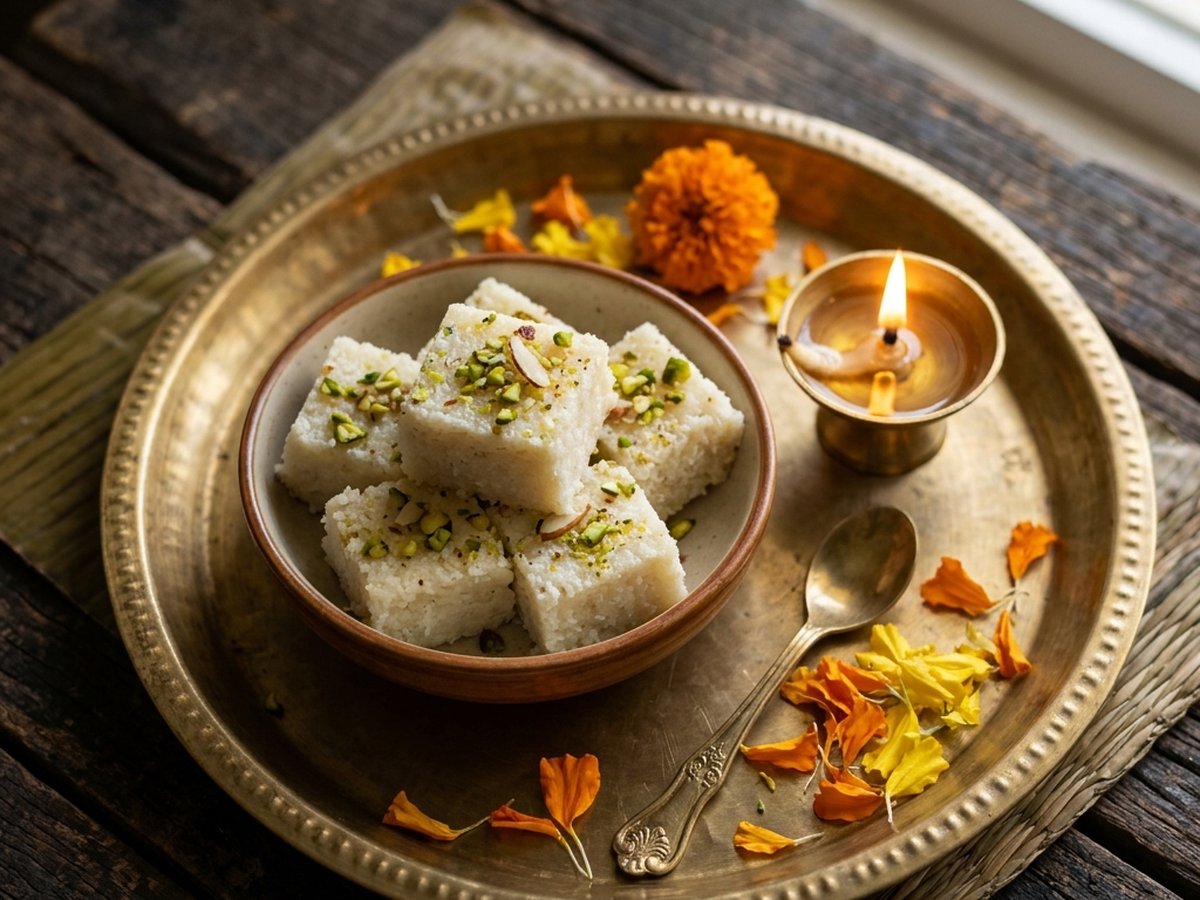
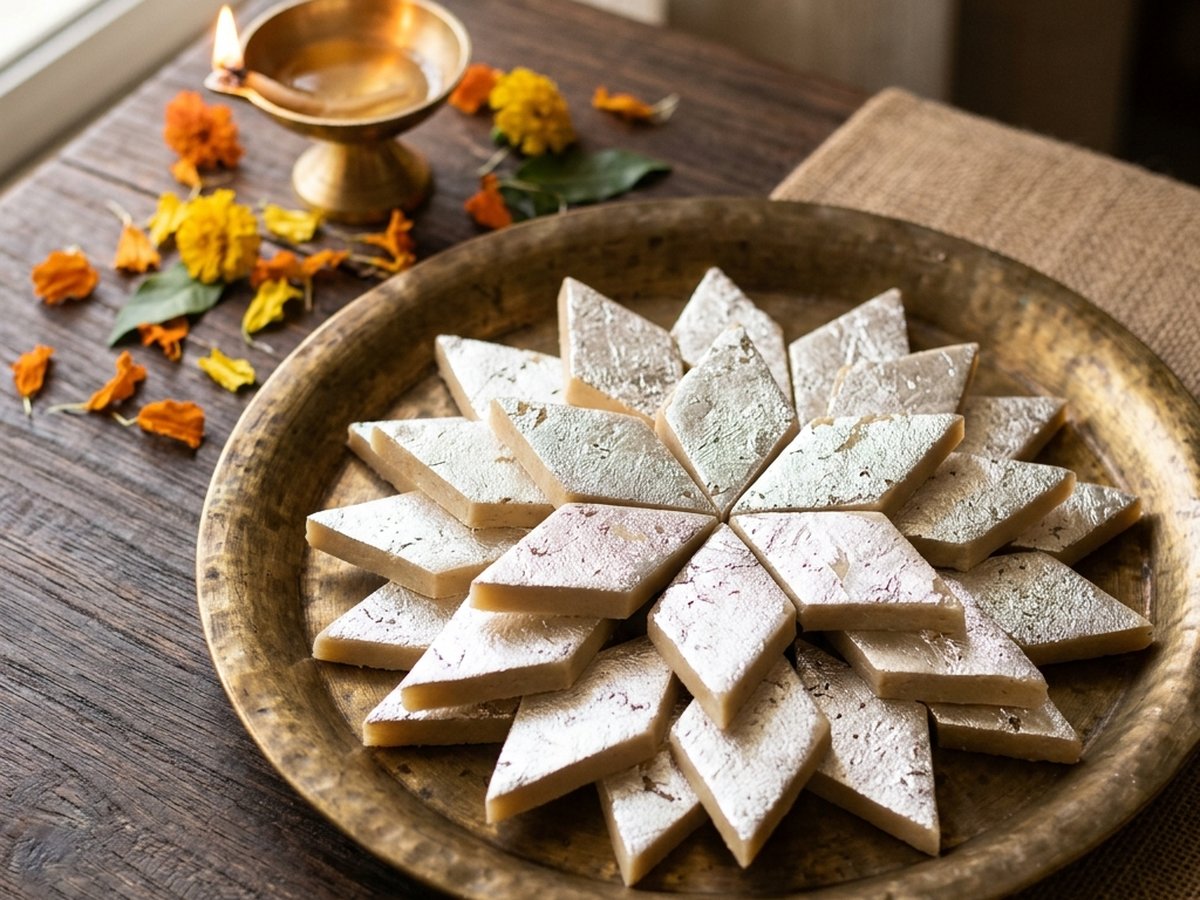
🍯 Traditional Narkel Naru / Coconut Barfi (Festive Sweet Squares)
⚖️ Fresh Grated Coconut : Sugar : Milk = 2 cups : 1 cup : 0.5 cup⏱️ Prep 15 min · Cook 25 min
Ingredients & Proportions:
- 2 cups fresh finely grated white coconut (avoid brown skin)
- 1 cup granulated sugar (or condensed milk)
- 1/2 cup fresh whole milk
- 2 tbsp pure cow ghee
- 1/2 tsp freshly ground cardamom powder
- 1 tbsp chopped pistachios for garnish
Method & Procedure:
- Grate the fresh coconut carefully, ensuring only the tender white meat is collected.
- Heat 1 tbsp ghee in a non-stick or heavy-bottomed kadai. Add grated coconut and sauté on low flame for 2-3 minutes (do not allow it to brown).
- Pour in the milk and sugar. Stir continuously on medium-low flame. The sugar melts and the mixture turns liquidy before gradually thickening.
- Cook for 10-12 minutes, stirring constantly until the mixture leaves the sides of the pan and comes together into a cohesive, glossy mass that doesn't stick to the spatula.
- Stir in cardamom powder and remaining 1 tbsp ghee.
- Transfer immediately into a pre-greased tray. Press smoothly using the greased flat bottom of a cup.
- Press sliced pistachios on top. Let cool for 15 minutes, then slice into neat diamond or square shapes while still slightly warm.
Texture Secret: Turn off the flame when a tiny pinch of mixture rolled between fingers forms a soft non-sticky ball. Overcooking will make the barfi hard and dry.
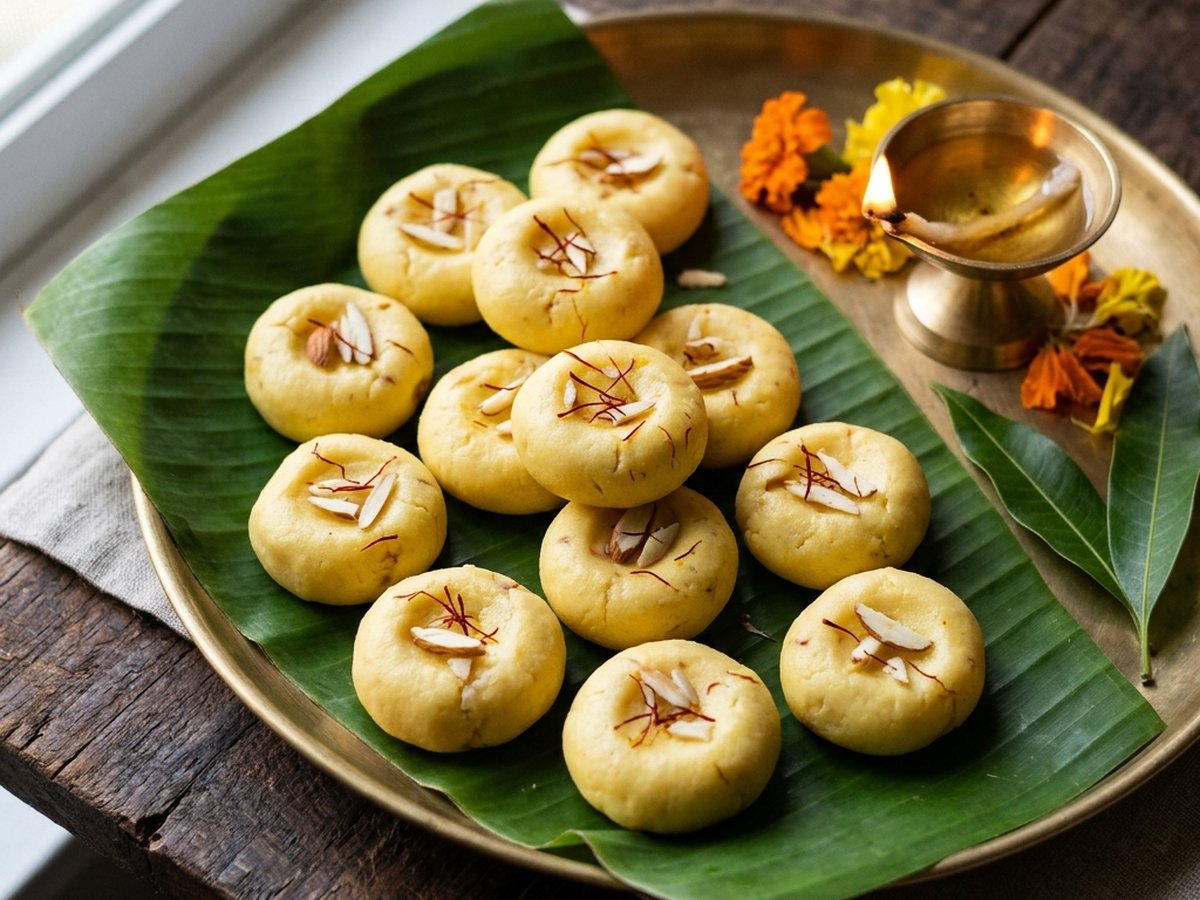
🍯 Instant Kesar Malai Peda (Saffron Milk Fudge)
⚖️ Milk Powder : Condensed Milk = 1 cup : 0.5 cup⏱️ Prep 5 min · Cook 15 min
Ingredients & Proportions:
- 1 cup full-fat milk powder
- 1/2 cup sweetened condensed milk
- 2 tbsp pure cow ghee
- 1 pinch saffron strands (soaked in 1 tbsp warm milk)
- 1/4 tsp cardamom powder & slivered almonds
Method & Procedure:
- Heat ghee in a pan on low flame. Add condensed milk and saffron-infused milk.
- Whisk in milk powder in 3 batches to prevent lumps.
- Cook on low heat, stirring continuously for 4-5 minutes until the dough thickens and forms a smooth ball.
- Turn onto a plate. When warm, grease hands with ghee and roll into small smooth pedas.
- Press an almond sliver or pistachio into the center of each peda.
Quick Treat: Takes under 10 minutes and requires zero refrigeration to set, perfect for busy festival mornings.
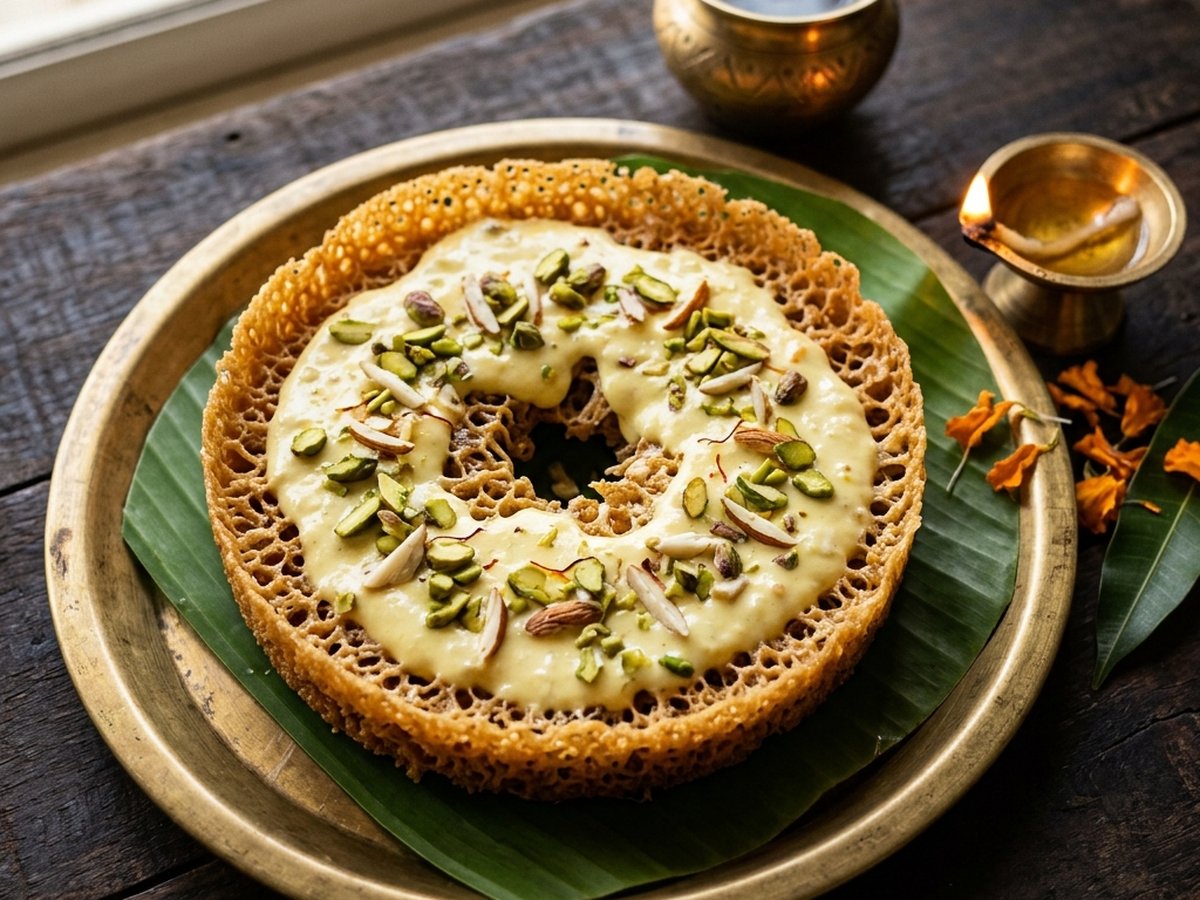
Sacred Threshold Art Blueprint: Kolam & Rangoli
📐 Raksha Sutra & Ashta Dala Padmam Kolam
📐 Grid Pattern / Dot Matrix: Central infinite knotwork circle surrounded by 8 lotus petals and thread loopsDrawing Sequence:
- Clean the entrance or seating area and sprinkle with scented rose water.
- Draw a central unbroken circle representing cosmic eternity and sibling protection.
- Inside the circle, sketch a stylized Rakhi motif: a multifaceted jewel in the center with braided silk threads extending horizontally.
- Expand outward with 8 graceful lotus petals drawn in fine rice flour.
- Highlight the inner ring with auspicious red kumkum and outer ring with sacred yellow turmeric.
The infinite circular Rakhi motif reinforces the unbroken bond of love and mutual protection. The 8 lotus petals channel Ashta Lakshmi's blessings of auspiciousness, health, and longevity.
Sacred Snanam & Pitru Tharpanam Protocol
🌊 Yajurveda Upakarma (Avani Avittam) Snanam & Kamo Karsheet Japam
- 1. Dawn Snanam & Bhasma / Namam Dharanam: Purifying bath at sunrise and applying sacred marks.
- 2. Kamo Karsheet Manyur Akarasheet Japam: Chanting 1008 times to atone for sins committed through passion and anger during the preceding year.
- 3. Brahma Yajnotsargam & Rishi Tharpanam: Honoring the Vedic lineage rishis (Veda Vyasa, Bodhayana, Apastamba) with water and darbha grass.
- 4. Yajnopavita Dharana Mantra: Removing the old sacred thread and adorning the new consecrated thread facing East.
- 5. Pitru Tharpanam (Aparahna): Offering black sesame seeds and water to ancestral pitrus.
Rigveda & Yajurveda Upakarma marks the annual renewal of Vedic study and studenthood. The mantra 'Yajnopavitam paramam pavitram prajapater yat sahajam purastat' invokes longevity, brilliance, and spiritual energy into the sacred thread.
Tradition & Conduct Guidelines
- Sisters traditionally fast from morning until the Rakhi tying ceremony concludes.
- Always tie the Rakhi on the RIGHT hand wrist, which governs solar spiritual vitality in the body.
- Check your city's Bhadra end time in a local almanac (Nava Panchangam does not compute it) and do not tie the thread before it.
Sisters break their morning fast immediately following the conclusion of the Aarti and feeding of sweets to their brothers.
Coinciding Festivals on Shravana Purnima
Upakarma / Avani Avittam
Yajur and Rig Veda Brahmins perform the annual ritual of renewing their sacred thread (Yagnopaveetham) and offering Kamokarshit japam.
- Bathing in holy river/theertham
- Yagnopaveetha dharanam
- Rishi tharpanam
Gayatri Japam (The Following Morning)
Devotees chant the supreme Gayatri Mantra 1,008 times on the morning following Shravana Purnima to expiate all speech karma.
- Sahasra Gayatri Japa
- Pranayama and Surya upasana
Pan-Indian Traditions on Shravana Purnima
📍 North & Western India
Raksha Bandhan
Tying ornate rakhis, Lumba rakhis tied by sisters-in-law (Bhabhi) on bangles, and family gatherings.
📍 Maharashtra & Coastal India
Narali Purnima
Fisherfolk offer coconuts to Lord Varuna (ocean deity), marking the end of the monsoon and resumption of fishing.
📍 Tamil Nadu, Kerala & Andhra
Avani Avittam / Upakarma
Annual renewal of the sacred cord, Veda parayanam, and chanting Kamokarshit manyurakarshit.
Diaspora Living Guide: Sending Rakhis Across Timezones
- Sending Rakhis Overseas: Mail your Rakhi cards at least 3–4 weeks in advance to accommodate international postal delivery to the US, UK, or Canada.
- Virtual Raksha Bandhan: If separated by continents, schedule a video call during the auspicious local muhurtham. The brother ties the received Rakhi while the sister recites the mantra on screen.
Modern Apartment Living & Emergency Substitutions
Aparahna Window & Strict Bhadra Exclusion: Classical Nirnaya Shastra states: 'Bhadrayam dve na kartavye sravani phalguni tatha' — two rituals must never be performed during Bhadra: Sravani (Raksha Bandhan) and Phalguni (Holika Dahan). Tying Rakhi during Bhadra is believed to bring misfortune to the brother's longevity. The ideal window is Aparahna (the fourth fifth of daylight, roughly 1:15-3:45 PM on a 12-hour day). If Aparahna is eclipsed by Bhadra, Pradosha Kala (sunset) after Bhadra concludes is selected. In South India, Shravana Purnima is prominently observed as Avani Avittam / Upakarma by Brahmins for changing sacred threads.
🏢 Apartment-Safe Hacks & Diaspora Solutions
- No Traditional Rakhi Available? Tie a clean sacred yellow-red cotton thread (Mauli / Kalava) around the wrist after consecrating it with the traditional Raksha sloka: 'Yena baddho Bali raja danavendro mahabalah, tena tvam anubadhnami rakshe ma chala ma chala'.
- Long-Distance Sibling? Send a consecrated Rakhi by mail in advance. On the day, connect via video call at the auspicious muhurtham; have the brother tie the Rakhi on himself while sister recites the blessing and virtually receives aarti.
- Brother Allergic to Sweets? Offer fresh dry fruits (almonds, walnuts) or fresh fruits (apple/banana) on the Aarti thali instead of sugar sweets.
Spiritual Significance: Draupadi's Sari & Lord Krishna's Vow
In the Mahabharata, when Lord Krishna cut his index finger while hurling the Sudarshana Chakra at Shishupala, blood flowed profusely. While others scrambled for bandages, Queen Draupadi unhesitatingly tore a piece of her own royal silk sari and tied it tightly around Krishna's bleeding finger.
Moved by her spontaneous sisterly devotion, Sri Krishna promised to repay every single thread of her sari manifold when she needed it most. Years later, during the humiliation in the Kaurava assembly, when Dushasana attempted to disrobe Draupadi, she surrendered to Krishna, and her sari became an endless cascade of celestial cloth, preserving her honor. The Rakhi is not a decorative thread; it is a sacred covenant of unconditional spiritual protection.
Frequently Asked Questions About Raksha Bandhan
What happens if Bhadra extends throughout the entire afternoon? ▾
If Bhadra covers the entire Aparahna window, Shastras permit tying Rakhi during the evening Pradosha Kala strictly after Bhadra has terminated, or during the Bhadra Punchha (tail) period.
Can a sister tie Rakhi to an elder or younger brother? ▾
Yes, Rakhi can be tied to brothers of any age (elder or younger), cousins, and even sworn brothers, invoking the same sacred protective bond.
See Your City's Panchangam for the Day
This page shows the Raksha Bandhan date and aparahna window for each city it lists. For any other day: tithi, nakshatra, sunrise, sunset and Rahu Kalam for your city.
Open Your City's Panchangam →